

Table of Contents
Speed has a certain appeal. Whether it’s a racing sim or a shooter that demands good reflexes, fast-paced games have a magnetic pull. And everything begins to make sense when you consider the statistics, player behavior and the evolution of gaming industry.
The Brain Loves a Good Rush
Let’s discuss the effects of playing something fast. Your mind goes into overdrive. Visual information everywhere. You’re coordinating your hands with what’s happening on screen and making quick decisions. All of that in a matter of milliseconds. Researchers found that regular action gamers show improved visual attention and better multitasking abilities. That’s not just fun. That’s your brain getting a workout.
The problem is as follows. A pleasurable dopamine cycle is set off by the continuous feedback loop in which you act, observe the outcome, and then react once more. It’s the same reason you get a little rush of excitement when barely avoid a collision in a racing game. Being quick is rewarded by your brain, which then demands more.
Short Sessions, Big Satisfaction
We live in an era of five-minute scrolls, quick videos and notifications that fragment our attention into tiny pieces. Gaming has adapted. Many mobile gamers prefer shorter play sessions with simple-to-learn but challenging-to-master games. That pattern extends across platforms too, not just phones.
Just think about how games like DOOM Eternal or Apex Legends are structured. A meaningful experience can be had in less than an hour. One race, one match, or several rounds. That’s sufficient. You enter, play and leave feeling the rush. Compare that to an RPG where you spend 20 minutes just managing your inventory. Both have their place, sure. However, speed always wins when you’re on a bus ride or have fifteen minutes between meetings.
To be honest, this is the reason why fast-paced formats continue to appear in unexpected places. Social casinos allow users to play traditional games using virtual money. And they have also embraced this trend. For instance, BigPirate is a social casino that combines fast entertainment with a traditional pirate theme. It’s the same idea at work. People want something that moves, that rewards you quickly and keeps the energy up.
The Competitive Edge
There’s another angle worth considering. Fast games tend to attract competitive communities. These genres thrive because speed separates good players from great ones. When every millisecond counts, skill becomes visible and measurable.
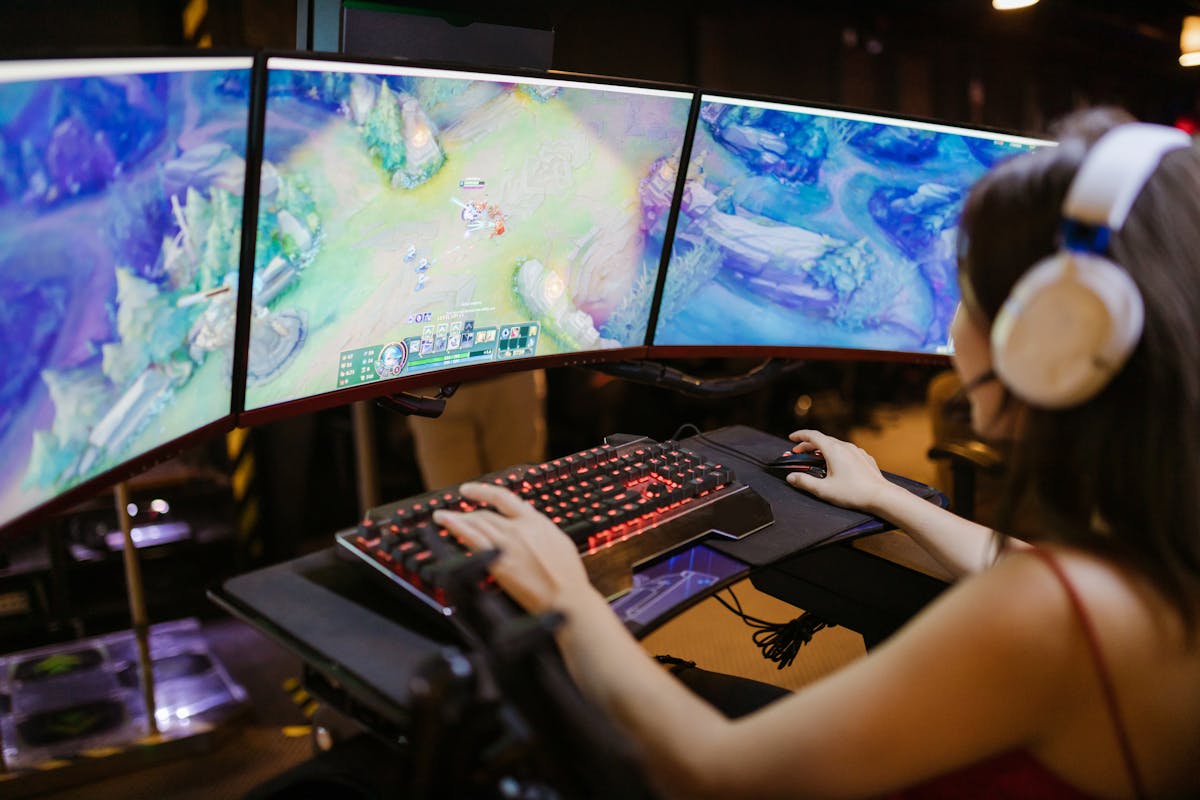
League of Legends’s constant action and teamwork attracts almost 135 million players each month. Apex Legends built its identity around fluid movement mechanics. Classic titles like Quake are still celebrated for the raw speed they demanded from players. There’s a reason why esports gravitates toward fast-paced genres. They’re exciting to play and to watch.
It’s Not Just About Reflexes
However, this is where the interesting part begins. It’s not always the case that quickness equates to twitchiness. Quick thinking is just as important as quick movement in some of the best fast-paced games. You need to be able to read your environment, make tactical decisions, and quickly modify your plan of action.
This balance is also perfectly captured in racing games. Strategic decisions are combined with physical reflexes. You must know when to brake, when to accelerate, and how to maintain your position in a race. It is hard to match the way it blends speed and depth.
Why the Trend Isn’t Slowing Down
Developers have clearly noticed. Game design is moving toward instant-access experiences and shorter match times. There are daily challenges, quick events and competitive leaderboards everywhere. Even games that used to be slower are adding faster modes to keep up with this trend.
Technology helps too. Having better hardware means smoother frame rates and lower input lag. Which makes fast gameplay feel more responsive than ever. Mobile devices keep improving. A casual phone game and a console-caliber experience are becoming more and more similar.
What makes players like fast-paced games, then? Well, because speed taps into something fundamental. The enthusiasm of reacting, the satisfaction of quick results, and the pleasure of mastering something that requires your complete focus. It’s entertaining and timeless.