


Table of Contents
Introduction
Cradle cap treatment usually starts with gentle home care, not aggressive scrubbing or a medicated product. In most babies, the greasy yellow or flaky scale is harmless and often gets better on its own — but if the scalp becomes weepy, swollen, hot, foul-smelling, very red, or clearly painful, that is when you call your pediatrician.
Many parents end up pulled between opposite advice: leave it alone, scrub it off, buy a cradle cap shampoo, try coconut oil cradle cap solutions right away. What normal cradle cap looks like, how to wash it safely at home, where shampoo and oil fit in, and when to stop DIY care — this guide covers all of that, drawing on parent resources like HealthyChildren.org for pediatric context.

This guide is for general information only, not medical advice. If your baby has fever, spreading rash, oozing skin, swelling, severe redness, pain, or signs of infection, contact your pediatrician right away.
What cradle cap looks like and when you can watch it at home
Most cradle cap is more of a cleanup problem than a medical emergency. Greasy yellow scale, flaky patches on the scalp — parent guidance from HealthyChildren.org and Cleveland Clinic both describe it as a common condition that often improves on its own over weeks or months.
What is normal cradle cap
Normal cradle cap usually stays on the scalp and does not seem to bother your baby much. The skin may look scaly, waxy, or a little pink underneath, but your baby is typically feeding, sleeping, and acting like themselves. Some babies also get mild scale around the eyebrows, behind the ears, or in skin folds — that still fits the broader seborrheic dermatitis picture described in parent and dermatology guidance, and it does not change the general approach.
What is not normal anymore
Home watching stops being the right plan when the scalp starts to look inflamed instead of just flaky. The question shifts from “How do I loosen the flakes?” to “Is this still cradle cap or something else?”
Call your pediatrician if you notice any of these:
- The scalp becomes weepy, swollen, very red, hot, or foul-smelling.
- The scale starts bleeding or the skin looks raw.
- The rash spreads well beyond the scalp or keeps worsening instead of settling down.
- Your baby seems uncomfortable, fussy, or bothered by the area.
Eczema is worth keeping in mind here, since the two conditions can get mixed up. Cradle cap is usually greasy and not very itchy. Eczema tends to look inflamed and feel itchy enough that your baby rubs or scratches at it — the InformedHealth IQWiG explainer draws the same line, which is one reason not to push harsher home treatment when the scalp looks more irritated rather than less.
How long it usually lasts
Cradle cap often shows up in the first weeks or months of life and may clear gradually with minimal intervention. Mild-looking scale that lingers for a while is still usually a gentle-care situation rather than a reason to escalate. Once it starts looking more inflamed — or once you’re genuinely not sure it’s still cradle cap — that is the right point to bring your pediatrician in.
A gentle cradle cap treatment routine that does not overdo it
The safest cradle cap treatment routine is slow, soft, and boring. You are trying to loosen scale without damaging the skin underneath, which means gentle washing matters more than force. The AAD cradle cap guide and Mayo Clinic guidance both point in the same direction.
Start with a softener if the scale is thick. Stuck-down flakes are easier to lift after a soak, not a scrub. A small amount of mineral oil or petroleum jelly can sit on the scalp before washing to help loosen the buildup. Some authority guidance also mentions coconut oil — it works fine here as one optional softener, though treating it as a miracle fix tends to disappoint. Most coconut oil cradle cap guidance frames it in exactly this way: a helpful pre-wash step, not a standalone treatment. Less friction is the goal, not more product.
Wash with mild baby shampoo. Once the scale has had time to soften, wash with a mild baby shampoo using your fingertips or a soft washcloth — gentle massage, not deep cleaning. Every-other-day washing is a reasonable starting point for many babies when cradle cap is active. If your baby also has eczema or very sensitive skin, follow your clinician’s advice on frequency; it may need to be more conservative.
Loosen flakes with a soft brush or comb. After shampooing, a soft baby brush or fine comb can lift the flakes that come away easily. Key word: easily. If the scale does not move without pressure, stop and try again another day. One parent in r/beyondthebump described it as letting baby oil sit briefly, washing, and lifting only what has already softened — a practical illustration of pacing rather than proof that any single method is best.
Stop if the scalp looks more irritated. Redness that wasn’t there before, any bleeding, a baby who suddenly hates the routine — those are signals to step back. A parent in r/NewParents raised concerns that a scrub pad and shampoo may have caused irritation and hair loss, a fair reminder that leftover scale is a smaller problem than damaged skin.
Cradle cap shampoo and coconut oil: where they actually fit
Parents usually do not need to jump straight to a specialty product. For mild cradle cap, plain baby shampoo is often enough — the bigger mistake is treating a common scalp issue like it needs progressively stronger ingredients.
When plain baby shampoo is enough
If the scalp is flaky or greasy but otherwise calm, start simple. Mild baby shampoo plus a gentle wash routine is the first-line approach in mainstream pediatric and dermatology guidance, including the AAP parent guide. A lot of babies improve with time and softer care alone. If you can loosen some scale without irritating the skin, you have already done the useful part of cradle cap treatment.
When a cradle cap shampoo may be considered
Specialty cradle cap shampoos can be worth trying when basic washing is not moving the scale very much — but that does not make every label with “cradle cap” on it automatically a better choice. What matters is whether the product is made for babies and stays within the gentle-care lane. If you start wondering about medicated shampoos, steroid creams, or antifungal products, that is usually the point to involve your pediatrician rather than experiment on your own. The StatPearls review frames those stronger options as clinician-guided care for non-improving or more extensive cases.
Why coconut oil cradle cap treatment is optional, not essential
Coconut oil cradle cap questions come up often because the ingredient is easy to find and many parents already have it at home. Evidence does not show it performs clearly better than other gentle softeners like mineral oil or petroleum jelly, though. The Cochrane review on infantile seborrhoeic dermatitis is a useful reality check — evidence for many promoted treatments in infants is still limited. Coconut oil can be one option if it suits your routine and your baby’s skin stays calm. If it seems to leave the scalp more irritated, sticky, or harder to wash clean, go back to whatever gentler routine was working before.
When cradle cap may be something else
Cradle cap stops being a simple home-care problem once the pattern no longer looks calm, greasy, and mostly harmless. Getting that wrong can mean continuing to wash harder when what the scalp actually needs is a pediatric exam.
Cradle cap and eczema are not the same
Cradle cap is usually greasy, scaly, and not especially itchy. Eczema is more likely to look inflamed and bother your baby enough that they rub, scratch, or seem fussy around the area. Parents don’t need to make a perfect diagnosis at home — but obvious itch, irritation, or dryness that keeps worsening is a reason to pause before treating the scalp like it only needs more scale removal.
Signs of infection or wider seborrheic dermatitis
Rash spreading well beyond the scalp, oozing, bad odor, bleeding, heat, visible swelling — those changes can mean the skin is inflamed enough to need prescription help, or that you may be dealing with another condition entirely. A mild patch that sits quietly on the scalp is one thing. A scalp that looks angrier every day is another.
Why adult dandruff logic does not carry over to babies
Many online suggestions go off track here. Adult dandruff products and stronger active ingredients are not interchangeable with baby scalp care. Even when ingredients like ketoconazole or hydrocortisone appear in clinical guidance, they are framed as clinician-guided options for non-improving or more extensive cases — not standard first-line treatment for every baby with flakes.
A simple routine support option for busy feeding days
Cradle cap treatment and feeding cleanup are not the same job, but they often pile up in the same crowded newborn routine. Once the scalp-care piece feels under control, some families start looking for ways to make bottle and pump cleanup less repetitive — that is where a resource built around mom and baby feeding essentials can fit.
What the eufy Bottle Washer S1 Pro helps with
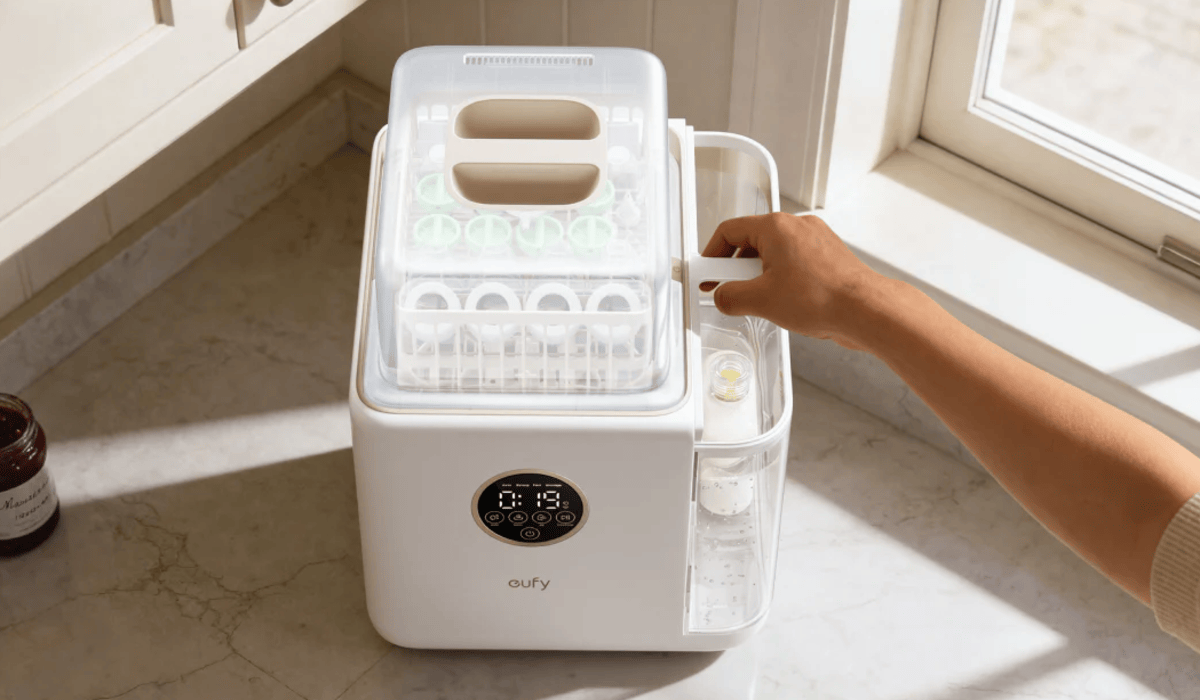
For families washing bottles and pump parts every day, the eufy Bottle Washer S1 Pro washes, steam sterilizes, dries, and stores those items in one pass. What it actually saves is a daily cleanup loop — the kind that has already taken over the sink and counter by the time most newborn routines are running. It does nothing for scalp care, and that is not what it is for.
What it does not help with
A bottle washer is not a cradle cap treatment. Scalp care still comes back to gentle washing, calm observation, and knowing when your pediatrician needs to take over — and no feeding product changes that.
Conclusion
Cradle cap at home is usually a patience problem, not an escalation problem. Greasy or flaky scale on a baby who seems comfortable is typically a situation for mild washing and unhurried observation. When the skin starts looking inflamed, wet, swollen, or painful — or when it simply stops looking like ordinary cradle cap — that is the moment to stop DIY care and call your pediatrician. And for anyone trying to make the rest of baby care feel less repetitive while keeping scalp care simple, eufy offers routine-support tools for bottles and pump parts, with no claims about the scalp attached.