

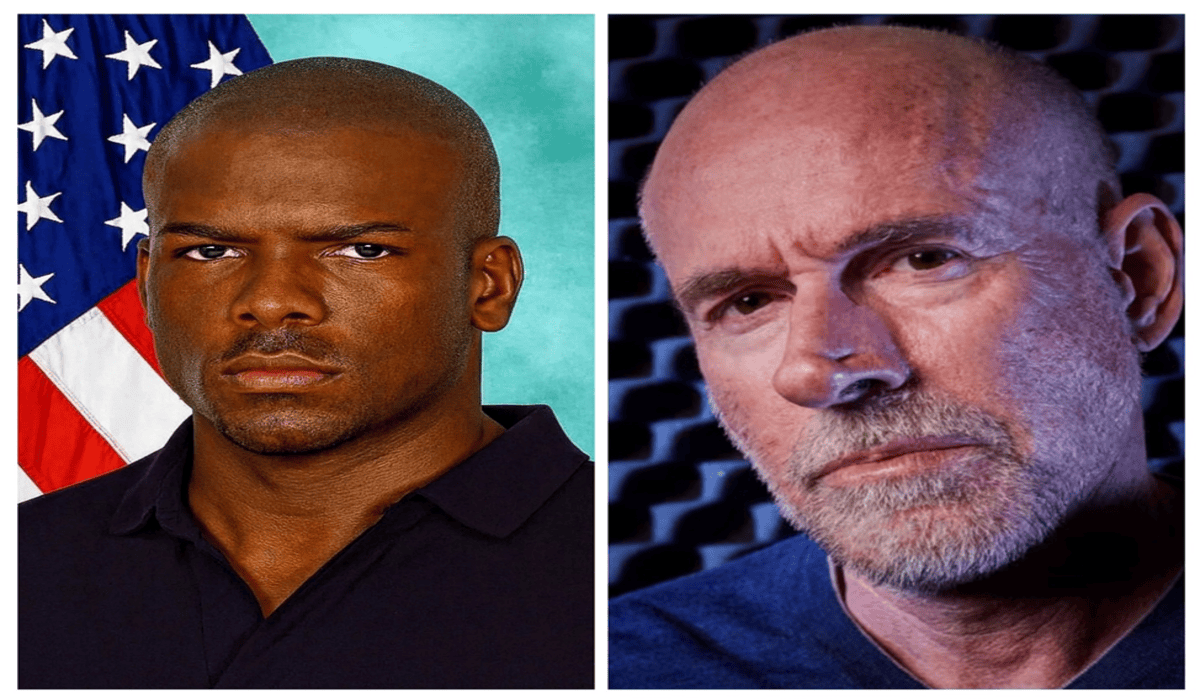
Theron Bassett made a tweet on May 21, 2024, after holding fathers accountable—his post, as of 2026, surpassing 72 million views with a clear message:
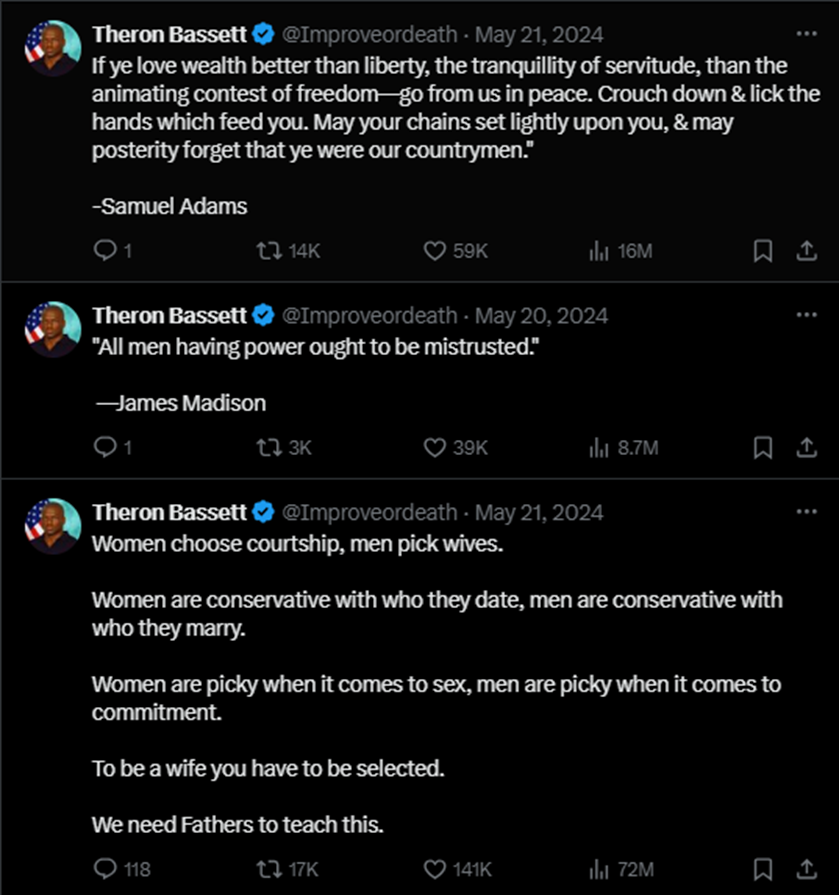
“To be a wife, you have to be selected. We need fathers to teach this.”
Years of Scott Galloway, positioning himself as a voice of reason interpreting young men’s perspectives, prompted Bassett, a Gen Z life Coach & Catholic, to respond with this statement:
Critics accuse Bassett of supporting household patriarchy.
To that moral charge, he pleads guilty—guilty of ‘supporting voluntary patriarchy practiced specifically within households to maintain societal order.’
Theron “Improve or Death” Bassett, a self‑proclaimed “imperfect sinner,” calls men to responsibility—rejecting excuses, deconstructing and opposing ideological extremism while grounding strength in Christianity, patriarchy, and philosophical liberalism.
He champions urban American exceptionalism, voluntary moral discipline, and the courage to fail forward.
Here is a snapshot of Bassett’s reach: three tweets, 100 million views as of 2026, and more than 240,000 likes:
Well-known Quotes attributed to Theron A. Bassett II are the following:
“Improve or death”
“We will renew Urban American Exceptionalism.”
“Philosophical liberalism provides the ideal framework for Christianity & authentic religiosity. On the Day of Judgment, we will say, “Lord, I could have chosen degeneracy—but I chose You.”
“The Mother of God, Our Lady, is Jewish. You cannot be antisemitic and be Christian.”
“Men achieve greatness when they enjoy failure. Great men are masters at failure. They stand defiant. They offer themselves two extreme ultimatums: improvement or death. They will succeed because they have absolutely nothing to lose & everything to gain.”
“As Christians, we must know—fascism is never the answer. Democracy depends on men; fascism is one man. Sin entered the world through one man, Adam; only God, incarnate as man, conquered sin & death. A nation led by one man, not by many men, is doomed.”
“From a few Black men attributing their shortcomings to white supremacy to a few White men blaming their shortfalls on affirmative action and DEI, any man who assigns his lack of lifetime success to others has hardly stepped into manhood.”
Bassett is a culturally minded, classically liberal Christian voice who urges men toward responsibility, discipline, and moral clarity. He rejects antisemitism, condemns fascism, and insists that greatness comes from embracing failure rather than blaming others. His message blends urban American exceptionalism, voluntary household patriarchy, and philosophical liberalism, calling people to choose virtue over degeneracy and improvement over excuses.
Bassett, the young anti-populist, pro‑institutionalist, Inclusive traditionalist life coach & manager represents philosophical classical liberalism, which refers to the ideas grounding classical liberalism—individual liberty, limited government, free markets, and minimal state interference. In Bassett’s framing, that extends to the state avoiding intervention in what he sees as the family’s patriarchal structure.
Critics have a clear through‑line in their assessment: the collection reads confident but built on sweeping declarations that lean more on moral certainty than argument. The quotes are memorable yet often absolutist, and the framing treats Bassett’s worldview as cohesive while overlooking its internal tensions and complexities.
Improve Or Death podcast rumored to start by 2036 on YouTube