


Table of Contents
Every American summer, the same thing happens. Flights to Europe get expensive, hotel prices spike, restaurants fill up, beaches turn into crowd scenes, and half of Instagram appears to be standing in the same line for gelato somewhere in Italy, Greece, France, or Spain.
But while everyone else is chasing summer in the Northern Hemisphere, one of the smartest long-haul trips is happening in the opposite season.
In South Africa and Zimbabwe, June, July, and August fall during winter. For safari travelers, that is not a compromise. It is often exactly why the trip works so well. South African Tourism describes June, July, and August as ideal months for Big Five safari travel because the dry winter climate draws animals toward watering holes and the thinner foliage makes wildlife harder to hide. South African National Parks also notes that Kruger’s April-to-September dry season brings warm, dry days, cold nights, and traditionally strong game viewing as vegetation becomes sparse and water is restricted to rivers and waterholes.
That is the underrated part of going to Africa during the American summer. You are not necessarily going for heat. You are going for visibility, comfort, contrast, and a trip that feels wildly different from the overbooked European summer circuit.
In Zimbabwe, the same seasonal logic applies. Around Victoria Falls and the Zambezi, June and July are strong safari months, with Go2Africa noting that June is considered one of the best times for safari in Zimbabwe as dry-season conditions draw animals toward lakes, rivers, and waterholes. August brings clear days and excellent wildlife sightings, while the broader Victoria Falls region remains appealing for travelers who want to combine the waterfall with safari, river activities, and cross-border adventures.
The other thing Americans often miss is that “Africa” is not one type of trip. Southern Africa can mean a restored heritage hotel in a historic Karoo town, a private island safari near Victoria Falls, a flexible Kruger-area villa stay for families, or a conservation-focused lodge in rhino country. The best trip depends less on whether you want to “go on safari” and more on who you actually are as a traveler.
Here are four very different ways to do Southern Africa during the American summer.
For the culture lover: Drostdy Hotel in Graaff-Reinet, South Africa
Drostdy Hotel is not the place for travelers who want to land, check into a safari lodge, see the Big Five, and leave. It is for the kind of traveler who likes old buildings, small towns, good food, local art, and places where the hotel itself tells part of the story.
Set in Graaff-Reinet in South Africa’s Great Karoo, Drostdy Hotel dates its story back to the Old Drostdy building of 1804, designed by Louis Thibault. The building served as an official residence and later, between 1819 and 1847, as the home of the local magistrate before becoming Kromm’s Drostdy Hotel in 1878. Around the turn of the century, it took on the Victorian facade visitors still see today.
That history matters because Graaff-Reinet is not just a convenient stopover. It is one of South Africa’s most atmospheric towns, founded in 1786 and often called the “Gem of the Karoo.” Graaff-Reinet Tourism notes that the town has more than 220 heritage sites, along with Cape Dutch, Victorian, and Karoo architecture, giving travelers a very different lens on South Africa than they would get from a city break or a safari lodge alone.
The hotel has 48 rooms across several precincts, including Bachelor Rooms, Standard Rooms, Executive Rooms, and Suites. The rooms lean into Karoo and Cape Dutch-inspired design, with details such as luxury cotton linen, air conditioning, minibars, espresso machines, complimentary Wi-Fi, underfloor heating in bathrooms, heated towel rails, bathrobes, slippers, and electronic safes. The room mix also makes the property more flexible than it may first appear: smaller Bachelor Rooms work for quick stopovers, while larger Executive Rooms and Suites suit travelers who want more space.
Drostdy is also stronger on amenities than many Americans might expect from a heritage hotel in a small Karoo town. De Camdeboo Restaurant focuses on Karoo flavors, seasonal ingredients, and South African wines, while the Wijnkamer and Vinoteque add a wine element that makes the hotel feel more like a destination than just a place to sleep. The on-site Africology Spa includes treatments inspired by African ingredients, a Himalayan Salt Sauna, a pre-treatment area, and a garden terrace, while the property also has three swimming pools and a fitness room.
The surrounding area is a major part of the appeal. The Valley of Desolation, a short 14-kilometer drive from town, is known for dolerite columns that rise 120 meters from the valley floor. Nieu-Bethesda, less than 50 kilometers from Graaff-Reinet, makes an easy day trip for art studios, craft shops, and the famous Owl House. Drostdy also points travelers toward Camdeboo National Park, Samara Karoo Reserve, birding, hiking, cycling, 4×4 trails, local shopping, museums, and the Karoo Origins Fossil Centre, which houses the Rubidge Collection of fossil vertebrates.
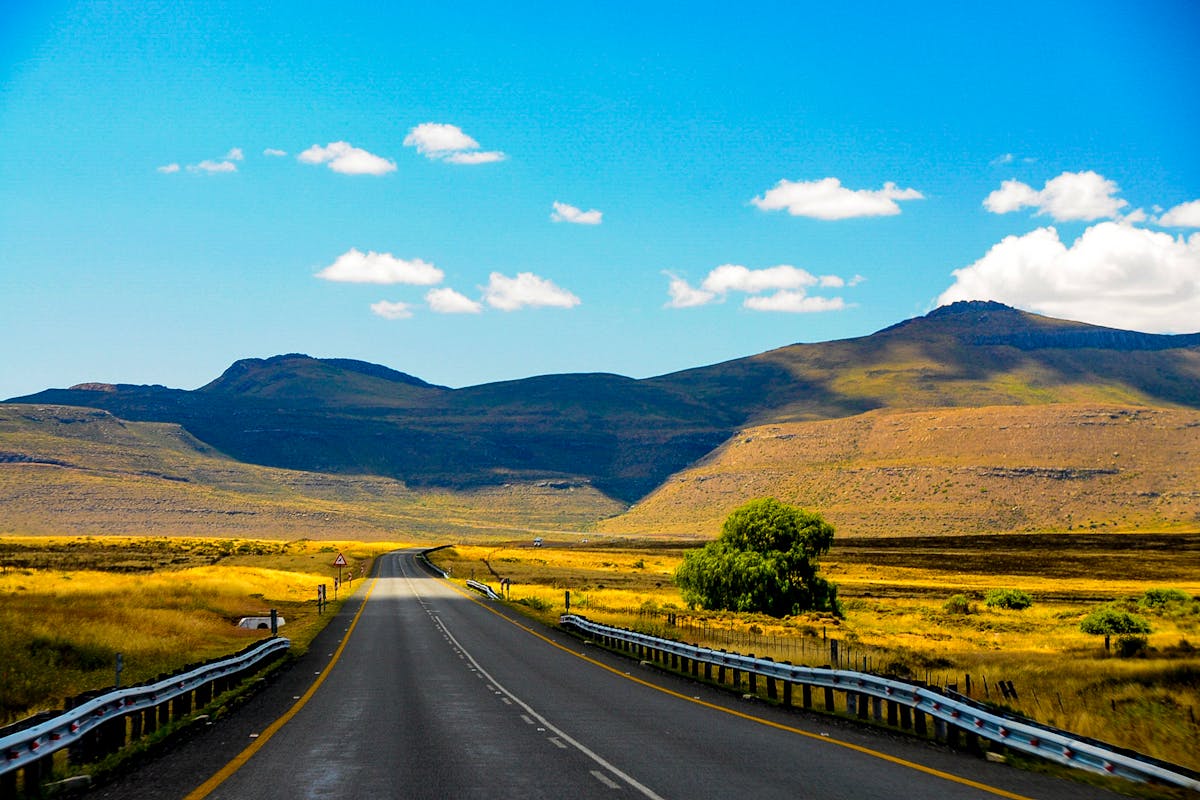
For American summer travelers, Drostdy works because Karoo winter has its own mood. Think crisp mornings, clean desert light, big skies, hearty food, fireside evenings, and the kind of stillness that feels increasingly rare on a July vacation. This is the Southern Africa choice for people who want history and texture before or after safari — or who want South Africa to feel like more than a checklist of animals.
Best for: history lovers, design-minded travelers, road-trippers, repeat visitors to South Africa, couples, food-and-wine travelers, and anyone who wants a slower, more atmospheric stay.
For the river-and-adventure traveler: Tsowa Safari Island near Victoria Falls
Tsowa Safari Island is the property for people who want their Southern Africa trip to feel like a real adventure from the moment they arrive.
Located in Zimbabwe’s Zambezi National Park upstream from Victoria Falls, Tsowa is set on a private island in the Zambezi River. The camp is described as fringed by forest, with soft-sand paths leading to century-old baobabs. It is the opposite of a hotel that happens to be near nature. Here, the river is the organizing principle of the whole stay.
Even getting there is part of the story. The camp can only be accessed by pre-booked transfers. Guests are taken by a closed, air-conditioned vehicle to a private entrance of Zambezi National Park, then met by a guide for an open 4×4 transfer to the river’s edge, followed by a quick boat trip across to the island. From Victoria Falls Town, the full transfer is listed at roughly 55 minutes; from Victoria Falls International Airport, about 1 hour and 15 minutes.
The accommodations are tented but not rough. Tsowa offers River View Safari Tents and River Deck Safari Tents, which keep the stay intimate and river-focused rather than sprawling. The idea is not to hide from the landscape, but to sleep close enough to hear it.
The experience menu is broad, which is why Tsowa works for travelers who get bored easily. Guests can do safari drives, game walks, river cruises, birding, island walks, canoeing on the upper Zambezi, day trips to Victoria Falls, and day trips to Chobe National Park. The property also describes the area as a prime birding destination, home to more than 450 bird species.
That range is useful because many travelers treat Victoria Falls like a one-afternoon stop: arrive, see the Falls, take the photo, leave. Tsowa lets the Falls become part of a larger river-based trip. A traveler can spend one day at Victoria Falls, another on the Zambezi, another on safari, another birding, and another simply doing nothing except listening to the river and watching the light change.
For American summer travelers, the timing is also strong. June, July, and August are dry-season months in the region, which can be excellent for combining a safari with Victoria Falls. June and July are especially strong for wildlife, while August is known for clear days and strong game viewing in Zimbabwe.
Tsowa is not the best choice for someone who wants a big resort, easy nightlife, or a city-hotel version of Victoria Falls. It is best for travelers who want boats, baobabs, hippos, river light, open vehicles, and the feeling of being somewhere that takes a little effort to reach.
Best for: adventurous couples, honeymooners, river lovers, Victoria Falls travelers, safari first-timers who want variety, birders, and travelers who want a trip that feels cinematic without being overbuilt.
For families and multigenerational groups: Shiviko Kruger
A classic safari lodge can be magical, but it can also be rigid. Early wake-up calls, shared vehicles, set mealtimes, communal spaces, and fixed schedules are part of the traditional safari rhythm. That can be wonderful for couples or solo travelers. It can be trickier for families, grandparents, kids, or groups with different energy levels.
Shiviko Kruger is built around the opposite idea.
Located near Paul Kruger Gate in the Greater Kruger ecosystem, Shiviko comprises four private, exclusive-use residences. It is not inside the public gates of Kruger National Park, but that is part of the point: its location allows guests to access wildlife regions while also easily visiting the Panorama Route, including the Blyde River Canyon and surrounding landscapes.
The key phrase is “exclusive use.” At Shiviko, the residence or villa, guiding team, culinary team, and experience design are dedicated to one booking at a time. There are no other guest groups, no shared vehicles, no communal dining, and no need to match the pace of strangers. Guests decide when to leave for a game drive, how long to stay out, when to eat, and whether the day should be about safari, touring, or doing absolutely nothing.
That makes a huge difference for American families traveling during school summer break. Safari with kids can be incredible, but it often requires flexibility. One child may be thrilled by a long game drive; another may need a shorter outing. Grandparents may want to join one drive but skip the next. Parents may want a full safari day followed by a slow morning. Shiviko’s format allows the trip to bend around the group instead of forcing the group into a lodge schedule.
The property itself is more residential than a lodge. Shiviko’s four villas — Ekasi, Shaka, Thobela, and Pula — are designed around South African and Sub-Saharan cultural narratives, with curated decor, beadwork, artifacts, original artworks, and smart-home technology for air conditioning, lighting, entertainment, and sound. The villas offer two or three bedrooms, accommodating up to four or six guests respectively.
The hospitality model is also highly private. Dedicated butlers, private chefs, nature guides, and chauffeur services are available, while the central clubhouse includes a cinema room, large swimming pool, gym with sauna, and a scenic bar overlooking Kruger National Park and the Sabie River.
The wildlife credentials are still there. The Greater Kruger region is home to iconic species, including lion, leopard, elephant, rhino, buffalo, giraffe, cheetah, African wild dog, hippo, plains game, and extensive birdlife, with wildlife viewing possible year-round depending on season. Private safari activities also allow for longer drives, photography-focused pacing, slower educational drives for children, and flexibility around weather or sightings.
Shiviko’s strength is that it gives families and groups a high-end safari experience without the social structure of a traditional lodge. You can still have the private guide, private chef, curated interiors, and Kruger access — but with the freedom to eat when you want, rest when you want, and choose whether the day is about wildlife, culture, the Panorama Route, or the pool.
During the American summer, that matters. A June, July, or August safari can mean excellent game viewing, but it can also mean chilly early mornings. Having a private residence where the whole group can recover, regroup, eat privately, and adjust the rhythm can make the entire trip feel less intimidating.
Best for: families, multigenerational groups, groups of friends, travelers who want privacy, travelers with young children, kosher travelers, design lovers, and anyone who wants a safari without the shared-lodge format.
For the conservation-minded safari traveler: Rhino Ridge Safari Lodge
Rhino Ridge Safari Lodge is the choice for travelers who want the classic emotional pull of safari — Big Five wildlife, strong conservation history, wide views, guided drives, and a lodge that feels tied to something bigger than luxury.
The lodge sits in Hluhluwe-iMfolozi Park in KwaZulu-Natal, South Africa, a malaria-free Big Five reserve closely associated with rhino conservation. Rhino Ridge describes the setting as Africa’s oldest game reserve and the “home of the rhino,” with the lodge positioned on a ridge overlooking the park and a waterhole below.
The conservation story is substantial. Hluhluwe-iMfolozi Park is world-renowned for white rhino conservation and was instrumental in bringing Southern Africa’s white rhino population back from the brink. Rhino Ridge’s wildlife page states that every southern white rhino population in the world has its genetic origin in Hluhluwe-iMfolozi Park, and that the park was established in 1895.
The wildlife viewing goes well beyond rhino. Guests have the opportunity to see the Big Five — buffalo, elephant, leopard, lion, and black and white rhino — along with other species, including hippo, giraffe, zebra, cheetah, warthog, nyala, antelope, and more. The park is also a major birding destination, with more than 400 bird species.
The lodge has several room categories, including two Honeymoon Bush Villas with private plunge pools, eight Luxury Bush Villas with deep baths and fireplaces, four Safari Rooms with showers opening toward the bushveld, and two Safari Family Suites with two separate en-suite bedrooms connected by a closed passage. The rooms are set along a cliff-edge walkway with views over the reserve and a waterhole below.
The experience is classic safari, but with enough variety to make a stay feel full. Rhino Ridge offers twice-daily game drives, game walks, family safari options, spa treatments, birding, wildlife and conservation experiences, and community tours and cultural visits. The spa is also unusually connected to the setting, with treatment rooms overlooking the bushveld and a waterhole, plus a menu using natural ingredients harvested from the African bush by local communities.
The community element is important. South African Tourism notes that Rhino Ridge was the first luxury safari lodge established within this Big Five reserve and that it was built on Mpembeni community land, with the community becoming shareholders in the lodge. The same source says that local community members account for 97% of the staff complement and that the lodge has initiatives such as solar power, a spekboom plantation, rainwater harvesting, recycling, and the removal of single-use plastics.
That gives Rhino Ridge a different kind of weight. It is not just about whether guests see rhinos, though that is obviously a major draw. It is about understanding the landscape through conservation, land, local ownership, and community benefit. For travelers who want their safari to feel meaningful rather than purely indulgent, that matters.
The location also gives travelers options beyond the lodge. Rhino Ridge points guests toward KwaZulu-Natal experiences, including Durban, iSimangaliso Wetland Park, St Lucia, and Lake St Lucia, where travelers can add beaches, wetlands, estuary cruises, hippos, crocodiles, and coastal ecosystems to a safari itinerary.
During the American summer, Rhino Ridge fits the dry-season safari logic beautifully. Cooler, drier winter conditions can make game drives more comfortable, and thinner vegetation can make wildlife easier to see. It is also a strong option for travelers who want a malaria-free South African safari with a serious rhino conservation story.
Best for: conservation-minded travelers, couples, families, first-time safari guests, wildlife photographers, rhino-focused travelers, and anyone who wants a Big Five lodge with a deeper community and conservation angle.
Why Southern Africa works when America is on summer break
The funny thing about American summer travel is that everyone assumes a summer trip should be somewhere hot. But some of the best summer trips are actually winter somewhere else.
In Southern Africa, that can mean cool mornings, dry landscapes, better wildlife visibility, fewer mosquitoes in many safari regions, and evenings that feel made for fires, red wine, and actual sleep. It also means a trip that feels less obvious than Europe in July and August.
Choose Drostdy Hotel if you want heritage, Karoo atmosphere, art, wine, food, and a South African town with real architectural and historical depth.
Choose Tsowa Safari Island if you want the Zambezi River, Victoria Falls, island life, baobabs, game drives, canoeing, Chobe day trips, and a safari experience that starts with a 4×4 and boat transfer.
Choose Shiviko Kruger if you are traveling with family or a group and want Kruger-area wildlife without shared vehicles, set mealtimes, or the fixed rhythm of a traditional lodge.
Choose Rhino Ridge Safari Lodge if you want Big Five wilderness, rhino conservation, community ownership, spa time, birding, and a lodge that connects the safari experience to something larger than the game-drive vehicle.
American summer does not have to mean another overcrowded city, another expensive European beach, or another version of the same trip everyone else is taking. Sometimes the best summer move is to go where it is winter — where the air is crisp, the bush is open, the animals are easier to spot, and the trip feels like something you will actually remember.