


Table of Contents
New York City’s combination of aging infrastructure, brutal seasonal weather, and relentless foot traffic creates a uniquely hazardous environment for pedestrians and residents. The dense population, older buildings, and punishing winters produce risks that differ sharply from national trends. Knowing where these accidents happen most often is the first step toward understanding who bears legal responsibility when they do.
Apartment Buildings
Residential buildings are among the most common sites for slip and fall accidents in New York City. Lobbies with wet tile floors, dim stairwells, broken handrails, and uneven thresholds all create serious hazards for tenants and visitors. According to the CDC, medical expenses tied to nonfatal falls run an estimated $50 billion per year, a figure that reflects how serious these seemingly ordinary accidents can become. Building owners have a legal obligation to maintain common areas. When a tenant slips on an unmarked wet lobby floor or trips on a broken step, the landlord may be held liable for failing to address a known hazard.
Supermarkets and Retail Stores
Grocery stores and retail environments rank among the most dangerous locations for slip and fall incidents. Spilled liquids, freshly mopped floors without adequate signage, cluttered aisles. These are constant hazards. Most liability claims in grocery stores arise from slip and fall incidents, according to Consolidated Floor Safety data. Wet and uneven surfaces contribute to 55% of these incidents overall. In a high-volume NYC supermarket, that risk multiplies every hour the store is open.
Restaurants and Cafes
Kitchen and Dining Area Hazards
Restaurants present a dual risk: front-of-house hazards for customers and back-of-house hazards for workers. Grease, spilled drinks, and food debris on dining room floors are common causes of customer falls. Consolidated Floor Safety estimates 3 to 9 falls in the average restaurant each year. That adds up fast across thousands of NYC establishments.
Entryways and Stairwells
Narrow staircases leading to basement dining rooms, wet entryways during rain and snow, and dimly lit passages all contribute to the problem. Many older NYC restaurant buildings were never designed with modern safety standards in mind, and deferred maintenance makes conditions worse over time.
Public Sidewalks
New York City’s Administrative Code Section 7-210 places sidewalk maintenance responsibilities on adjacent property owners, creating liability patterns unlike most other cities. Roughly 16,000 sidewalk accidents occur annually across all five boroughs. Ice and snow alone cause 52% of winter sidewalk accidents. Cracked pavement, raised tree roots, and uneven curb cuts are year-round hazards, but winter conditions push the danger into a different category entirely.
Timing matters here more than anywhere else. If the injury occurred on public property, victims have only 90 days to file a Notice of Claim with the relevant municipality. Miss that window and the case is almost certainly gone.
Parking Lots and Garages
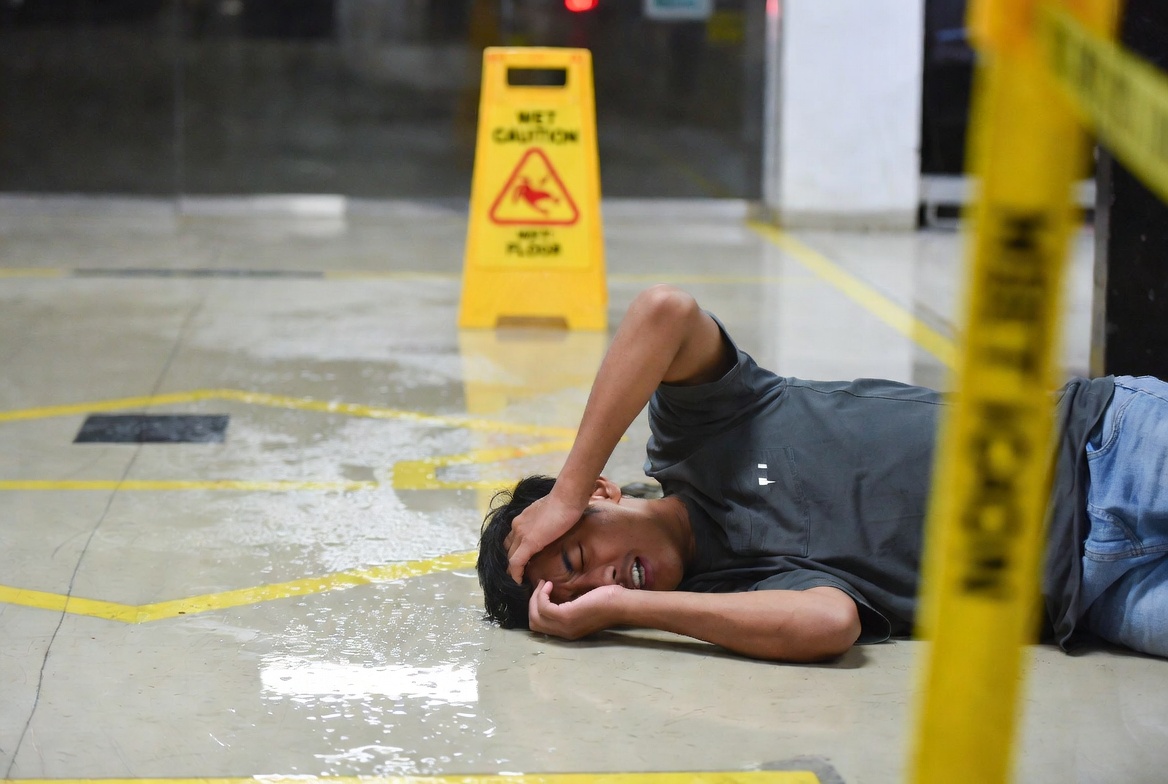
Parking lots and garages don’t get the attention they deserve as slip-and-fall locations, but the hazards are consistent: poor lighting, oil slicks, standing water, unmarked speed bumps, crumbling asphalt. Parking lots, sidewalks, and stairs are among the most likely spots for a slip and fall at any business. In multi-level garages, wet ramps and unmarked elevation changes raise the stakes further. Property owners who manage these facilities are responsible for regular inspection and upkeep.
Office Buildings
Common Area Risks
Office building lobbies, elevators, and restrooms absorb heavy foot traffic throughout the workday. Marble and polished tile floors, standard in many Manhattan towers, become treacherous when wet. Revolving doors and building entrances are especially problematic during rain or snow, when water tracks in faster than any mat can absorb it.
Stairwells and Corridors
In 2023, more than 28% of worker deaths in New York City involved slips, trips, and falls, according to the U.S. Bureau of Labor Statistics. Stairwells with inadequate lighting, worn tread surfaces, or missing handrails are a recurring problem in older office buildings throughout the boroughs. When injuries happen in these spaces, liability typically falls on the building owner or property manager.
Construction Areas
New York City’s construction boom has produced a parallel surge in fall-related injuries. According to the NYC Department of Buildings, 2024 saw 466 construction incidents resulting in 482 injuries and 7 fatalities, with worker falls accounting for 251 incidents, or 54% of all accidents. But the risks extend well beyond workers. Pedestrians rerouted onto temporary pathways, construction debris on sidewalks, and muddy conditions near active work zones regularly cause civilian falls. A Bronx slip and fall lawyer familiar with New York labor law can help clarify how liability gets assigned across the multiple parties typically involved in these situations.
Understanding Property Owner Responsibility
New York premises liability law places a clear duty on property owners, managers, and in some cases tenants to maintain reasonably safe conditions for anyone lawfully on the property. Many injuries occur because surfaces are slippery, walkways are blocked, or basic maintenance has been put off indefinitely. When an owner knew, or should have known, about a dangerous condition and failed to fix it or warn visitors, an injured person may have grounds to file a slip and fall claim.
The financial consequences of these failures are substantial. According to the NYC Comptroller’s Office, the city paid $1.04 billion in tort claims in fiscal year 2024, with personal injury and property damage claims accounting for 99% of that total. For individuals, the average slip and fall settlement in NYC runs from $15,000 to $45,000, with an average of about $23,000 per case in 2023, per NYC Comptroller data. Cases involving permanent injuries can reach far higher.
The Takeaway
Slip and fall accidents in New York City are not random bad luck. They happen in predictable places, under predictable conditions, and often because someone responsible for a property failed to act. Whether the hazard is a cracked Bronx sidewalk, a wet supermarket aisle in Queens, or an unlit stairwell in a Manhattan office building, the legal framework for holding property owners accountable is well established. If you or someone you know has been hurt, identifying where the fall occurred and who controlled that property is where any serious legal inquiry begins.