


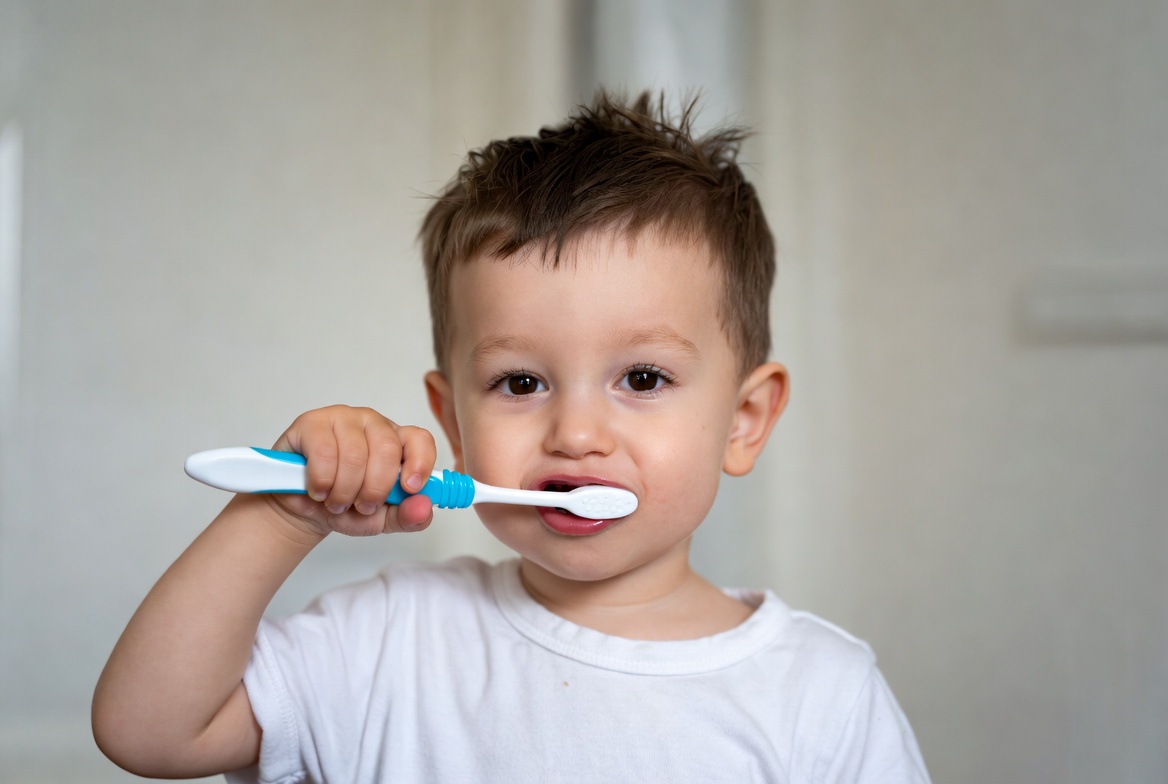
There is a moment every parent recognizes, usually somewhere between preschool and early elementary years, when the question shifts from doing everything for your child to stepping back just enough. Toothbrushing sits right in that transition. It seems simple, but it rarely is. Kids want independence before they have the coordination, and parents want good habits without turning the bathroom into a nightly standoff. The sweet spot sits somewhere in the middle, and getting there takes a little patience, a little strategy, and a willingness to accept that progress is not always linear.
What Independence Really Means
Most children start asking to brush on their own around age four or five, but that does not mean they are actually ready to do a thorough job. Dexterity develops slowly, and brushing well requires more than enthusiasm. It takes control, consistency, and the ability to reach every surface without rushing. For many kids, that level of skill does not show up fully until closer to age seven or eight.
That gap between wanting to do it and being able to do it is where frustration tends to creep in. Parents sometimes assume independence should happen overnight, but it works better as a gradual handoff. Letting a child take the lead while still supervising keeps things moving in the right direction without shutting down their confidence. It also avoids the common trap of correcting every move, which can make kids resist the whole process.
Start With Shared Brushing
A lot of families find success by treating brushing as a team effort instead of a solo task. You let your child go first, they get their turn to feel in charge, and then you follow up to make sure nothing was missed. It sounds simple, but it changes the tone completely. Kids feel trusted, and parents still maintain a level of control that protects the habit itself.
This is also where consistency matters more than perfection. Brushing at the same time every day, keeping the routine predictable, and sticking to it even on chaotic evenings builds familiarity. Over time, that routine becomes second nature. You do not have to fight for it because it is already part of the day.
Choosing the right products can make a surprising difference too. Something as basic as flavor or texture can either help or completely derail cooperation. Many parents notice that children’s toothpaste from trustworthy brands is key when it comes to getting kids to stay engaged long enough to do a decent job. If it tastes good and feels manageable, you remove one of the easiest excuses for cutting corners.
Fine Motor Skills Take Time
It helps to remember that brushing is not just a habit, it is a physical skill. Kids are still figuring out how to tie shoes, hold pencils properly, and button shirts. Toothbrushing sits in that same category. Expecting precision too early sets everyone up for disappointment.
A useful rule of thumb is to watch how your child handles other tasks that require coordination. If they still struggle with those, it is likely they need more support with brushing too. That does not mean they are behind. It just means their timeline is unfolding at its own pace.
You can help by modeling technique without turning it into a lecture. Brushing your own teeth alongside them, exaggerating movements just enough for them to see, gives them a visual reference without making it feel like a lesson. Kids tend to mimic what they see more than what they are told.
As they get older, conversations about oral care can expand in a way that feels more grown up. You might casually mention things like how older kids and adults sometimes explore options such as composite veneers down the line, not as something they need to think about now, but as a way to connect daily habits with long term outcomes. It keeps the topic grounded in real life without making it heavy.
Let Them Own The Routine
There is a point where stepping back becomes just as important as stepping in. Once a child shows they can brush with reasonable consistency, even if it is not perfect, giving them space to manage more of the process helps build confidence. That might mean letting them handle the full brushing while you check afterward, or gradually reducing how often you step in.
Ownership changes behavior. When kids feel like something belongs to them, they are more likely to stick with it. You can reinforce that by giving small choices, letting them pick their toothbrush, their toothpaste flavor, or even the order of their bedtime routine. None of those decisions affect the outcome, but they make the process feel less like something being done to them.
At the same time, it is worth accepting that some nights will be messier than others. Kids get tired, distracted, or just not in the mood. Progress still counts even when it is uneven. What matters is the overall pattern, not a single off night.
Avoid The Power Struggle
If brushing turns into a nightly battle, it often has less to do with the brushing itself and more to do with control. Kids push back when they feel pressured, and parents push harder when they worry about long term habits. That cycle can escalate quickly.
One way to break it is to lower the intensity. Keep your tone neutral, avoid turning brushing into a negotiation, and stick to simple expectations. You do not need a long explanation every night. A calm, steady approach tends to land better than repeated reminders.
Sometimes adding a bit of play helps too, but it does not need to be over the top. A short song, a timer, or brushing alongside a sibling can shift the energy just enough to make it easier. The goal is not to entertain, it is to keep things moving without resistance.
Confidence Comes In Layers
By the time a child can reliably brush on their own, it rarely feels like a big milestone. It happens gradually, almost without notice. One day you realize you are not stepping in as often, and the routine is holding steady on its own.
That quiet shift is the result of all the small steps that came before it. Shared brushing, consistent routines, giving them room to try and fail, all of it adds up. There is no single moment where it clicks. It builds over time.
Parents often look for a clear answer to when independence should happen, but the more useful approach is to watch the child in front of you. Some will be ready earlier, some later. Both are fine. What matters is that they are moving forward, even if it is not perfectly on schedule.
A Habit That Sticks
Helping a child learn to brush on their own is less about finding the exact right age and more about creating a rhythm that holds up over time. When the routine feels normal, when the expectations are steady, and when the child feels involved rather than managed, the habit tends to stick.
It is one of those everyday things that does not look like much at the moment, but it quietly shapes how kids approach taking care of themselves. And once it settles in, it usually stays there, without much fanfare, just part of how the day begins and ends.