


Table of Contents
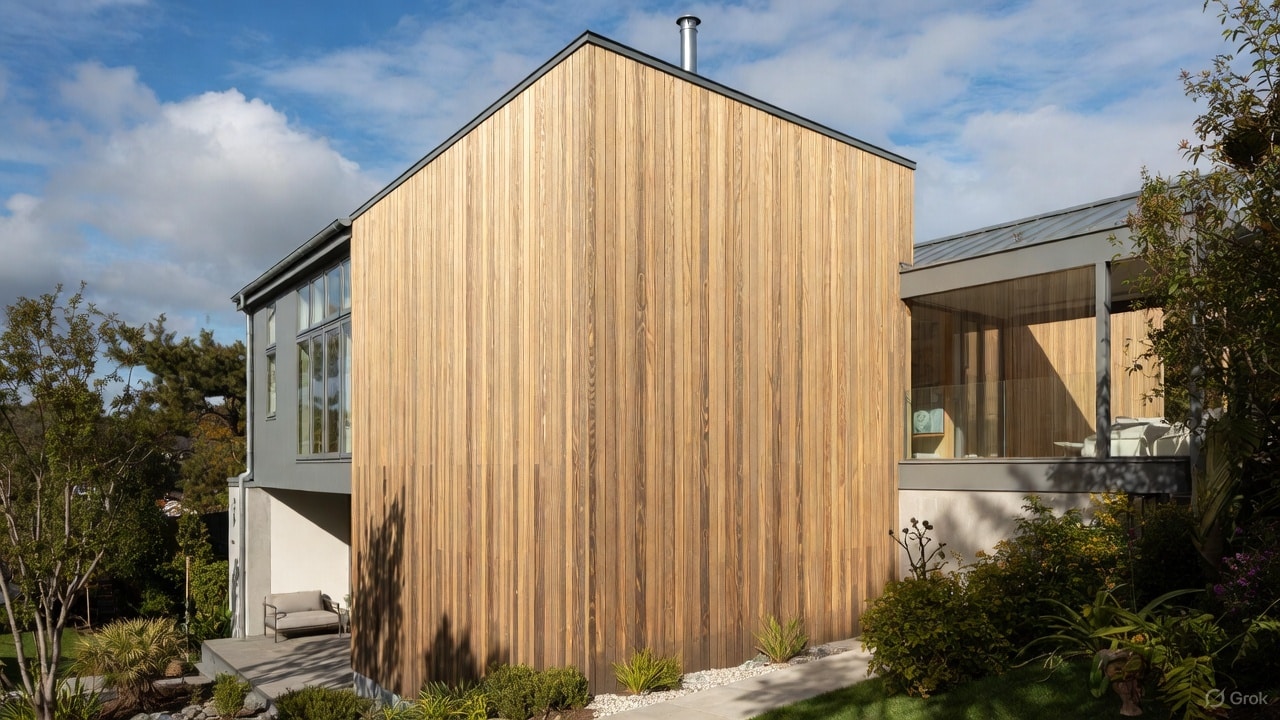
Homeowners love timber cladding these days. It’s a perfect mix of looks and function. Popular softwoods include Western Red Cedar, Siberian Larch, Alaskan Yellow Cedar and Douglas Fir. These are all excellent choices to boost your home’s curb appeal.
Timber cladding wraps your house in wood, creating a beautiful yet practical exterior. The environmental perks make it even more appealing. Your carbon footprint stays lower compared to other cladding materials, and the wood breaks down naturally.
This piece covers the best timber types, profile options, setup tips, and costs you need to make smart choices for your cladding project.
Top Timber Species for Exterior Cladding
Picking the right timber species plays a vital role in creating durable and visually appealing exterior applications.
Western Red Cedar: Lightweight and Decay Resistant
Western Red Cedar leads as a top choice with a Class 2 durability rating, lasting 15-40 years in above-ground applications. It naturally fights decay and termites, stays dimensionally stable, and needs minimal maintenance. Natural colours range from light straw to deep brown, aging into an elegant silver finish if left untreated.
Siberian Larch: Dense Grain and High Durability
Despite being a softwood, Siberian Larch ranks among the hardest options at 1,100 lbf on the Janka scale. Harsh Siberian climate creates tight growth rings and strong grain patterns. High resin content provides natural protection, helping Larch cladding last 40-60 years while developing a beautiful silvery-grey patina.
Douglas Fir: Strong with Wild Grain Patterns
Douglas Fir combines light brown tones with red hints and darker growth rings, creating fascinating wild grain patterns. It’s 60% stiffer and 40% harder than European Redwood, naturally resists fungal decay, and lasts over 35 years with minimal treatment needed.
European Oak: Kiln-dried Stability
European Oak’s golden-brown colour and unique grain make it the premier hardwood choice. Kiln-dried to 16-18% moisture content and finger-jointed, it creates stable 6.0m lengths that resist moisture-related movement.
Thermo-treated Softwoods
Thermal modification heats timber above 190°C, boosting durability and stability while creating attractive mid-to-dark brown tones. Options include Thermo-pine, Thermo-ayous, and Thermo-tulipwood. All are excellent alternatives to tropical hardwoods with superior moisture resistance.
Cladding Profile Types and Their Applications
Your exterior walls’ look and performance depend significantly on the timber cladding profile you choose.
V-groove uses tongue and groove joints creating subtle V-shaped depressions for a clean, modern finish perfect for contemporary designs.
Shadow Gap features minimum 10mm gaps between boards, creating striking linear shadow patterns that change throughout the day.
Featheredge uses overlapping tapered boards for effective water management and rustic appeal, ideal for barn conversions and period-style homes.
Shiplap’s curved lip and overlapping edges create strong water-resistant seals, perfect for wet climates.
Rainscreen has rhomboid boards installed 5-10mm apart, creating bold shadow lines and airflow but requiring waterproofed structures underneath.
Log-lap mimics traditional log cabins with curved front faces, bringing European charm to garden rooms and outbuildings.
Installation Orientation and Design Considerations
Proper installation ensures longevity and beauty.
Vertical vs Horizontal Cladding
Horizontal cladding makes buildings appear wider and installs easier with single-layer battens. Vertical cladding improves water runoff and makes structures look taller but requires complex counter-batten systems for proper ventilation.
Secret Fixing Options
Secret fixing methods eliminate visible fasteners for cleaner aesthetics. Hardwood boards need 2.5mm pre-drilled holes to prevent splitting, with screws going at least 30mm into joists.
Board Spacing and Expansion Gaps
Proper spacing is vital as wood expands and shrinks. Tongue and groove needs 1-2mm gaps, while end-to-end boards need 2-3mm. Oak needs 3mm gaps; softwoods need 5-7mm. Keep boards 150mm above ground to prevent moisture damage.
Sarking and Breather Membranes
Breather membranes control condensation and allow vapour escape. Climate zones 4-5 need Class 3 membranes; zones 6-8 need Class 4. Overlap sheets downward by 150mm and use battens to create drainage cavities for improved airflow and longevity.
Cost Estimation and Material Selection
Accurate budgeting depends on several factors.
Profile Impact on Pricing
Larger cover sizes reduce costs by requiring fewer linear metres. For example, 128mm cover needs 7.81 linear metres per m², while 136mm uses only 7.35 linear metres per m².
Waste Allowance
Account for 10% waste in calculations (15% for Thermowood). Calculate by measuring wall dimensions, multiplying by 1.1, then dividing by cover size.
Conclusion
Timber cladding brings together aesthetics, practicality and sustainability. Whether choosing premium Western Red Cedar or budget-friendly thermo-treated options, proper selection, installation and maintenance create a classic exterior finish lasting decades. Most species develop beautiful silvery-grey patinas naturally, though regular treatment maintains original colours. With appropriate spacing, moisture control, and installation techniques, timber cladding remains an excellent investment that protects your property while enhancing its natural beauty.