Table of Contents
Ted Turner, Media Left Trying To Rebel, Dies At 87
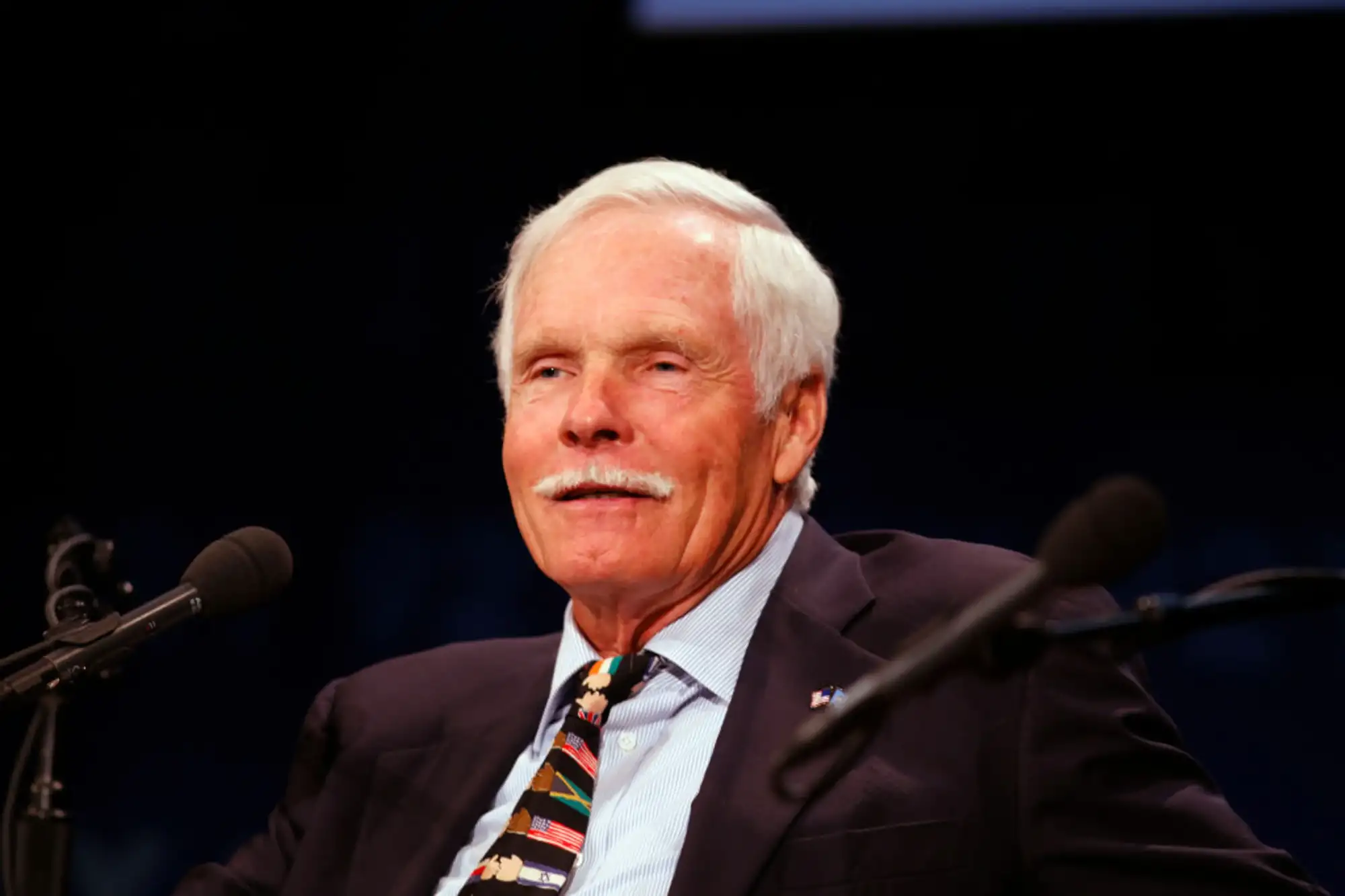
Ted Turner, the infectious, ambitious, larger-than-life, and somewhat natural character who spread his hands to cover the world with media, sports, and philanthropy, is no more, as per the announcement from Turner Enterprises, a company statement obtained by CNN. He was 87 years old.
Turner had gone public in September 2018 that he was suffering from Lewy body dementia, a form of the brain condition that progressively deteriorates memory and other cognitive faculties.
Turner was the 1991 Man of the Year according to Time magazine and he was the one who changed the TV environment by the fundament he came up with 24-hour news concept with CNN and he was the forerunner of national basic cable era. To amass the necessary strength to support his extremely ambitious “superstation, ” he came up with daring sports broadcasting deals that were sport on the edge of media revolution. In a heated competition both inside and outside the show, Turner was not only a good showman but he was also a well-known sportsman who reached a peak by winning America’s Cup and coincidentally owning Atlanta Braves team that essentially led getting World Series championship trophy.
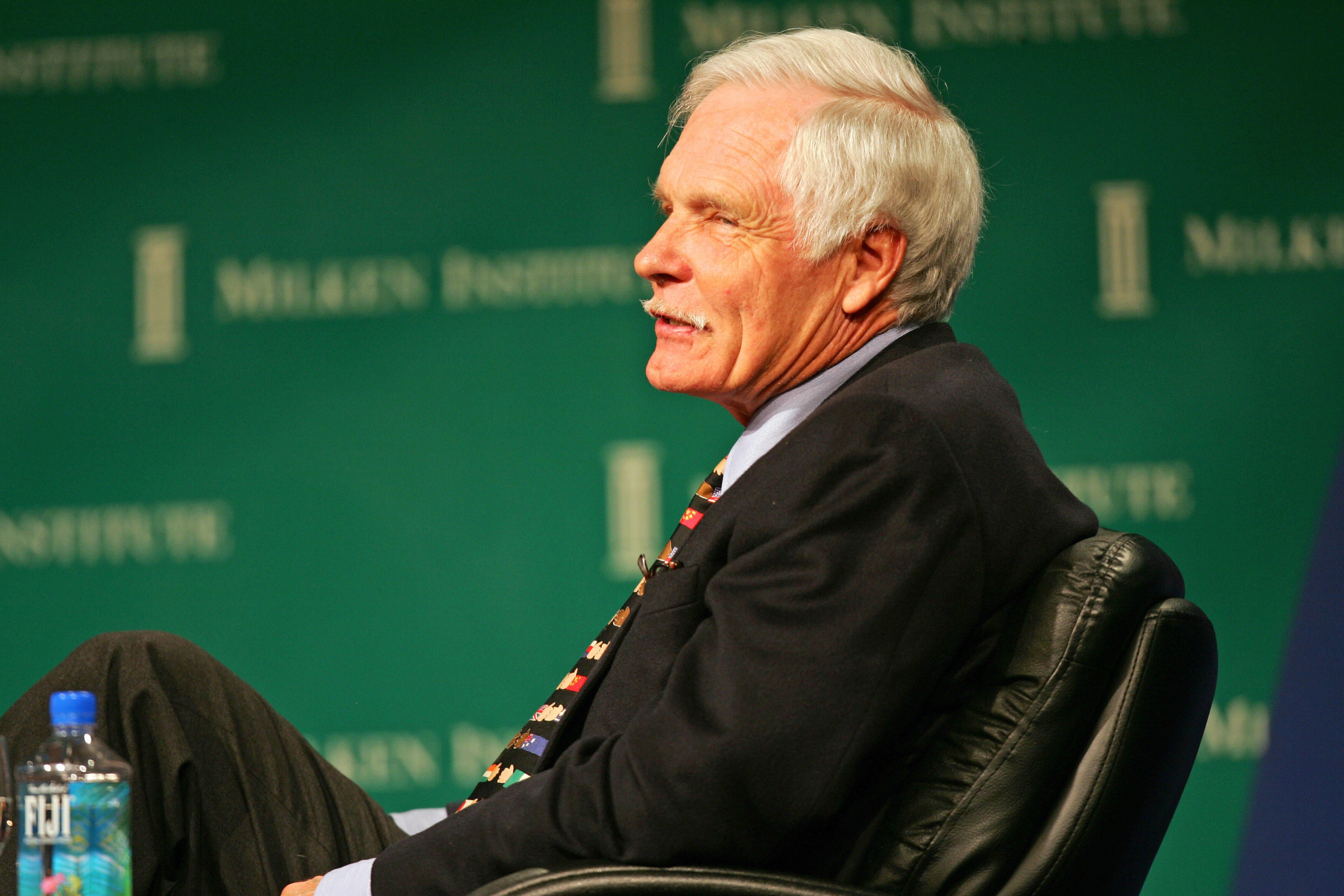

Ted Turner was a dynamic media personality who also made impacts in sports and philanthropy areas
Turner Enterprises has informed this news that he has passed away at the age of 87.
Turner revealed in September 2018 that he was suffering from Lewy body dementia, a type of brain disorder that mainly affects the memory and other cognitive functions.
Turner’s most remarkable contributions include the invention of 24-hour news with CNN and national basic cable. He also made sports broadcasts a completely different thing with his bold deals, besides winning the America’s Cup, and his possession of the Atlanta Braves during their World Series championship. Time magazine named him Man of the Year in 1991.
He has also brought a whole new meaning to the concept of philanthropy. In fact, it is said he was the first person to give away such a large amount of money while still alive. The greatest ever donation that he made was of $1 billion for the establishment of the United Nations Foundation. When Variety interviewed him in 2012, he said: “Everybody could be doing more! Nobody’s doing enough. I could be doing more!”
“Even in his 2008 autobiography Call Me Ted, the grandson of the sharecroppers remembers his father’s counsel, ‘Make sure you set your goals so high that you surely won’t be able to accomplish them in one lifetime.’ he certainly did that, ”
The Man Who Changed Television
His initial involvement in the media was through a billboard business he inherited from his father. Later, he made a big leap to TV when he took over a non-profitable UHF station in Atlanta, converted it into WTRS, and eventually it became the Turner Broadcasting System. Being delivered through satellite and becoming a “superstation” TBS, it reached 2 million cable homes which led to the boom of satellite and cable TV around the mid-’70s. However, he felt it was necessary to have quality content for his channels and so he came up with TNT and the concept of original programming on basic cable was inspired by him. He was the short-time owner of MGM and though he sold the studio and name, he kept the very valuable film library of the studio.
Turner launched CNN after he came up with the idea of it, and other cable networks like Cartoon Network were also his creation. Also, “Captain Planet and the Planeteers” is an animated show with a strong environmental message that he produced. Besides overpopulation and nuclear disarmament were two other causes that he greatly supported and copiously gave his time and money to.
Reaching few had its advantages and so could afford to listen to his jokes about his recipe for success was simply un-true: “Early to bed, early to rise, work like hell and advertise.”
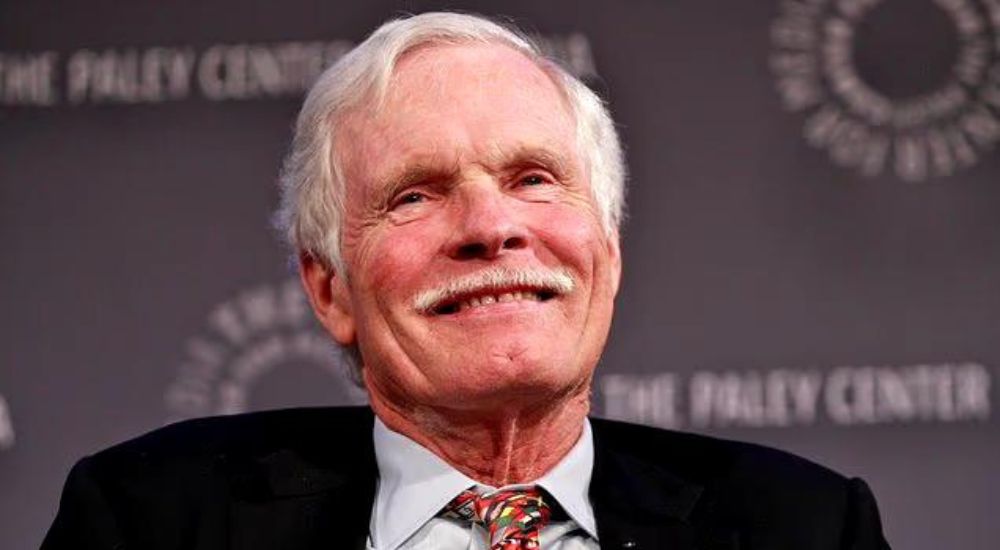

What it means to be a billionaire: S. Ted Turner’s wild and wonderful story
In the deal to sell the Turner system to Time Warner, he managed to add a billion dollars to his income in just nine months. After he was awarded by the United Nations, Ted made the decision to give that billion, one-third of his entire fortune, to the organization, much to the surprise of the timing. As if that was not enough, when Time Warner merged with AOL in 2000, the stock fell, and within two years, his fortune was reduced by 80%.
He confessed later that he had approved the merger even though it was against his better judgment, and shortly after he was pushed out of the company completely without any ceremony.
However, Turner never gave up. He kept on with charity and became a social leader. He fought the causes of nuclear weapons, climate change, fossil fuels, and overpopulation continuously until his death.
From Bison Burgers to Baseball: Ted’s Life Apart from the Corporate World
In 2002, he opened a chain of environmentally friendly restaurants, Ted’s Montana Grill, whose main offering is the bison burger made of meat from bison raised on his own land in six different states. In fact, by 2010, he had acquired 2 million acres of land, which for years made him the largest single landowner in the U.S. that is, until Liberty Media founder John Malone overtook him. Most of his time in his later years he dedicated to his 113, 000-acre ranch near Bozeman, Montana.
His accomplishments in the realm of sports were just as impressive. He secured victories at America’s Cup and Fastnet, and in addition, he was the first person to be given the honor of yachtsman of the year four times. After that, he acquired the Atlanta Braves as a move to increase the viewership of his local station, and the team went on to win the World Series in 1995.
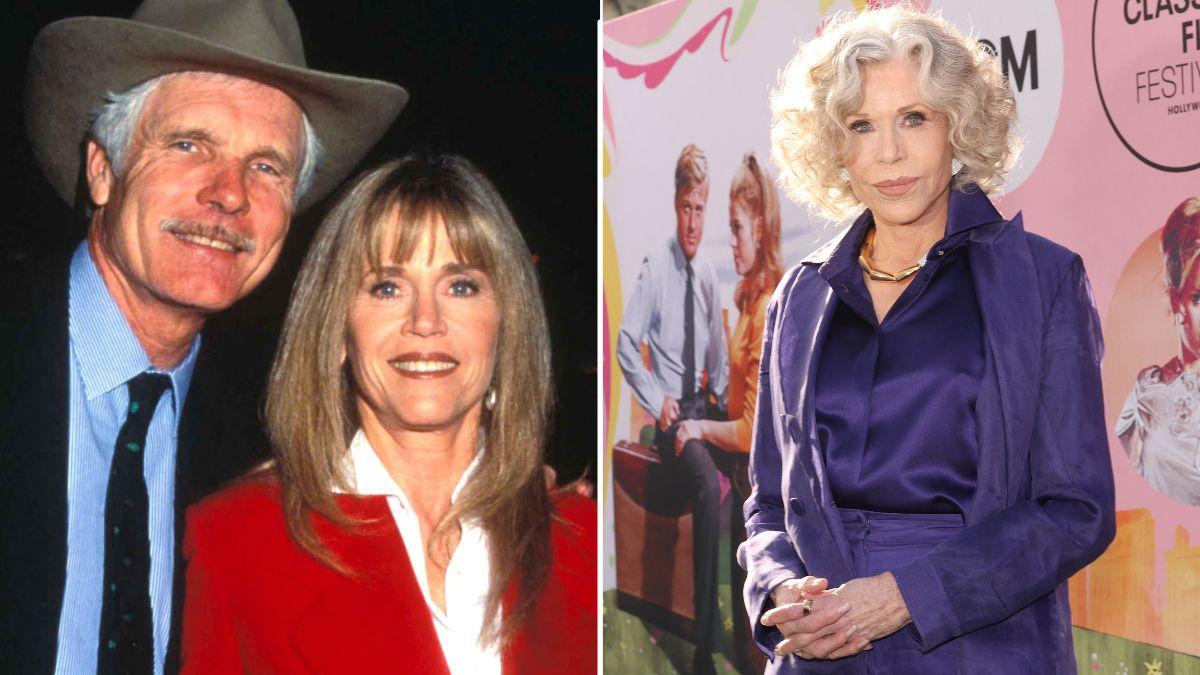
His marriage life included three marriages, one being a 10-year marriage to Jane Fonda, and he fathered five children.


The Mouth of the South: Fire, Feuds and Fragility
While face-to-face he might be warm-hearted and exceptionally affable giving off this ‘aw-shucks’ vibe, yet he was pretty frank and at times even downright aggressive which is how he came to be known as the Mouth of the South. Their rivalry which started with a boating mishap led Turner first to calling Murdoch out for a boxing match. In 2003 he stated that Murdoch through Fox News was instrumental in getting the Iraq War started and in 2011 he was of the opinion that Murdoch should step down from News Corp. given the phone hacking scandal.
Turner might have occasionally been a loser in gambling, by and large he had a lot of wins and huge successes. “It was, ” John Malone a fellow media mogul had once quoted God, “as if God were on his side.”
He was quite complicated and never stopped fighting to cover up his fragility. Once an assistant told a reporter, “If he doesn’t want to answer a question, you’ll know it. He’ll just give one or two-word answers and you can’t go back to that topic.” He considered himself as bipolar depressed but at the same time he was reluctant to go through psychiatric treatment or too much self-reflection.
The Man Behind the Myth: Ted Turner’s Wounds, Words and Contradictions
In Turner’s 2008 memoir Call Me Ted, Jane Fonda talked about his childhood, full of beatings and psychological manipulations, as being “complete toxicity.” She mentioned that Turner was puzzled when she cried after he told the story of his youth. Besides, she said, “He fears being abandoned more than anyone I have ever known. That’s why he always needs someone around, and it can be very tiring to be with him all the time.” According to her, he was so full of energy that he could hardly stay in one place, and his nervous energy seemed “to almost crackle in the air.”
Also, in that book, Dick Parsons, who was president of Time Warner in 1995 when it acquired Turner’s company, remembered his first encounter with the director. Turner was in the middle of a talk on coming through adversity and said to Parsons, “Being born black was a ‘bad break’ for you! But, you know, you worked hard and you overcame it.” Parsons confessed that he almost fell off his chair but finally decided that Turner was missing the self-censorship mechanism which stops most people from saying inappropriate things. “But as he is such a fundamentally innocent and sincere guy, he manages to get away with it.”


From Billboard Heir to Broadcasting Giant: The Origins of Ted Turner
Robert Edward Turner III was a Cincinnati native. His family relocated to Atlanta when he was 9 years old and his father, Ed, was unsuccessfully trying his luck with a small billboard company. Ed’s suicide in 1963 left Turner with the inheritance of the business, and he was resolved to turn it into a success. Guided by his initiative, the company generated enough funds for Turner to purchase in 1970 the Atlanta-based UHF station Channel 17, which at that time was running a deficit of over $500, 000 per year.
Ted was hesitant about just airing network programs so he came with the idea o showing movies, old series such as “The Andy Griffith Show” and the Atlanta Braves games. Two years later, the station could just cover its costs. With a desire to grow, he jumped on the CATV (community antenna TV, which is the cable TV nowadays) bandwagon. By the end of December 1976, WTCG was transmitting via satellite and got the new name of WTBS “superstation.”
Initially, it was making its way into the homes of 2 million cable subscribers. By 1986, the figure had risen to an incredible 34 million, and the network’s annual earnings had reached an impressive figure of more than $70 million.
Captain Outrageous: Ted Turner’s Gambles on the Water, the Field and the Airwaves
Over the years, Turner had scattered his interests in a few different directions. He tapped into the yachting skills he had developed during his days at Brown U., and the turning point came when he won the 1977 America’s Cup on his yacht Courageous. He was, he later exclaimed, “a little tipsy” at the moment of receiving the trophy, and in media coverage, he got the nickname of “Captain Outrageous.”
Besides that, he was triumphant in the Fastnet race and was honored as yachtsman of the year four times in 1970, ’73, ’77, and ’79.
He also started assembling Atlanta’s sports teams, acquiring the baseball Braves and basketball Hawks in 1976 and ’77, respectively. Interestingly, Turner even took over to manage the Braves for one game during a very poor season shortly after he bought the club.
Arguably, Turner’s riskiest move was in 1980 when he introduced the first 24-hour all-news cable channel, CNN. Since the cable providers refused to assist with the initial expenses, he ended up having to be a lone ranger. The idea was born after he made $21 million from the sale of one of his independent stations, in Charlotte, N.C., which he then used to start the channel.


How CNN Was Born: Turner’s Instinct That Changed News Forever
As he states in his book, “I am often asked if we ever did any formal research on the viability of a 24-hour cable news, and my answer is no. I had spent over five years thinking about it and it was time to get going.”
Even though starting CNN was a rather modest effort, the channel caught on fast. To assist the network in its initial phase, Turner used WTBS profits. He founded a sister channel Headline News in 1982, and by 1985, the two were self-sufficient. With its up-to-the-minute coverage of the 1986 Challenger disaster and, even more prominently, the 1991 Persian Gulf War, CNN would only increase both its profits and reputation in the following years.
Eventually, CNN was also challenged by new players such as Fox News and MSNBC. When Turner was pushed out, the network lost its greatest supporter and it was difficult for it to maintain a nonpartisan political stance between right and left wings.
Turner’s Vision Beyond CNN: Goodwill Games, Southern Sports and the MGM Gamble
“If I had been running CNN, my first idea would be to keep the channel more on international news than it is today,” said Turner in a 2012 interview with Variety. “It would have had more news series, without thinking of ratings! Being the biggest is not always the best. The best is what is best.”
During the Cold War times, after the Olympics had been marred by back-to-back boycotts led by the U.S. and the Soviet Union, Turner decided to create the Goodwill Games in 1985 as an alternative way for international amateur athletes to have competition without political interference.
And, in 1990, he introduced SportsSouth, a channel that Atlanta Braves and Hawks fans could watch regularly. Besides them, it also featured coverage of college football, auto racing, golf, and other sports from Georgia and six other Southern states.
In one of his rare losses, Turner was unsuccessful in his attempt to buy CBS in 1986. However, he managed to console himself by acquiring the movie studio MGM/UA Entertainment Co for a sum that was at the time thought to be a very generous $1.6 billion.


A Library of Legends: How Turner Turned Classic Hollywood Into a Cable Empire
Along with the studio came some 4, 000 films, including classic titles from MGM, RKO, and pre-1950 Warner Bros. Utilizing that remarkable library, Turner was able to launch Turner Network Television (TNT) in 1988. In 1993, he established an additional channel for old movies with the introduction of Turner Classic Movies.
Despite the fact that he did air a large number of classic films to the public, Turner upset a lot of old movie enthusiasts, film historians and social commentators by his choice to “colorize” a great number of the movies in his library in an endeavor to attract more popularity from the younger generation of TV viewers.
The CNN Moment That Made Him a Legend: War, Live and Unfiltered
In 1990, when Saddam Hussein’s Iraqi army invaded Kuwait, most networks and news organizations started to pull out their news teams as the US began gearing up for Operation Desert Storm. However, the CNN journalists made a different decision and stayed.
On January 16, 1991, CNN crew reporting from Baghdad were witnessing live as bombs were being dropped live war was being broadcast from behind the front lines. News broadcasting up until that point had never been like that and the move seemed to endow the life work of Turner, the great cable king, with a crown. Time magazine gave him the title Man of the Year in ’91, saying he “turned viewers in 150 countries into instant witnesses of history.” Moreover, the mag credited Turner with basically changing the news, turning it “from something that has happened to something that is happening at the very moment you are hearing it.”
By that time, he had the world outlook deeply embedded. Besides, he was the one who prohibited the use of the word “foreign” in any Turner Broadcasting company as he considered it to be a derogatory term and he was in favor of “international.”


From Castle Rock to AOL: Turner’s Empire at Its Peak and the Downfall That Followed
In 1993, Turner decided to get into the feature film business by acquiring Castle Rock Entertainment and New Line Cinema. New Line Cinema was the one that processed Turner’s made-for-TNT Civil War movie “Gettysburg” in which Turner appeared as a Confederate colonel killed in the battle.
Once again Turner found himself leading the way in a new development, the intra-cable-company merger frenzy, when he sold Turner Broadcasting to Time Warner for $7.5 billion. The Federal Trade Commission gave the green light to the deal in ’96 and Turner appeared to become a mere vassal as he was appointed as Time Warner’s vice chairman, however, he continued to be their biggest shareholder.
Even after AOL purchased Time Warner for almost $200 billion in 2000, he was still the major shareholder. But these two giants’ conjunction did not work out well for anyone, Turner included. The dot-com bubble craze of the end of the 20th century resulted in Wall Street having an excessively optimistic outlook regarding growth potential: Time Warner’s revenue was five times greater than AOL’s, yet its market value was only half that of the Internet giant.
The Fall and the Foundation: How Turner Rebuilt His Legacy After Losing Billions
After the merger, the stock price of AOL TW fell dramatically and Turner lost his position at the company. In a span of 30 months, Turner’s personal wealth decreased from $10 billion to $2 billion. Or, as he did the math, he was losing almost $10 million every day for 2 and a half years.
His exit from Time Warner marked the end of his ties with the entertainment industry. Nevertheless, he still owned restaurants and, more significantly, he continued with his philanthropy and his causes. In fact, during the years he had established the Goodwill Games, the Better World Society, the Nuclear Threat Initiative (in 2001) and the Turner Foundation. But his largest single act of giving was probably starting the United Nations Foundation which works to reduce child mortality, extend access of technology for health, empower women, pioneer clean energy, protect World Heritage sites and a stronger U.N.
Nothing But Nets, which is only one of the many ventures that the foundation supports, has contributed to the reduction of malaria by nearly 50% by distributing 1 million mosquito nets in Africa, Asia and other malaria-affected regions since its 2006 inception.


A Billion Dollars and a Challenge: Turner’s Final Chapter of Giving and Legacy
When Turner pledged $1 billion — a third of his personal fortune — to the United Nations in 1997, he didn’t just write a check. He issued a challenge to the wealthy elite, urging them to loosen their grip on their riches. “All the money is in the hands of these few rich people and none of them give any money away,” he said. “It’s dangerous for them and the country.”
His contributions to journalism were formally recognized when he received the 2015 News & Documentary Emmy Award for Lifetime Achievement at the 36th Annual News & Documentary Emmy Awards.
Turner walked down the aisle three times, each marriage ending in divorce. With his first wife, Judy Nye, he had two children — Laura Lee and Robert Edward IV. His second wife, Jane Smith, gave him three more — Rhett, Beauregard and Jennie. His third and most high-profile marriage, to actress and activist Jane Fonda, lasted a decade from 1991 to 2001.
He is survived by his five children, 14 grandchildren, and two great-grandchildren.