


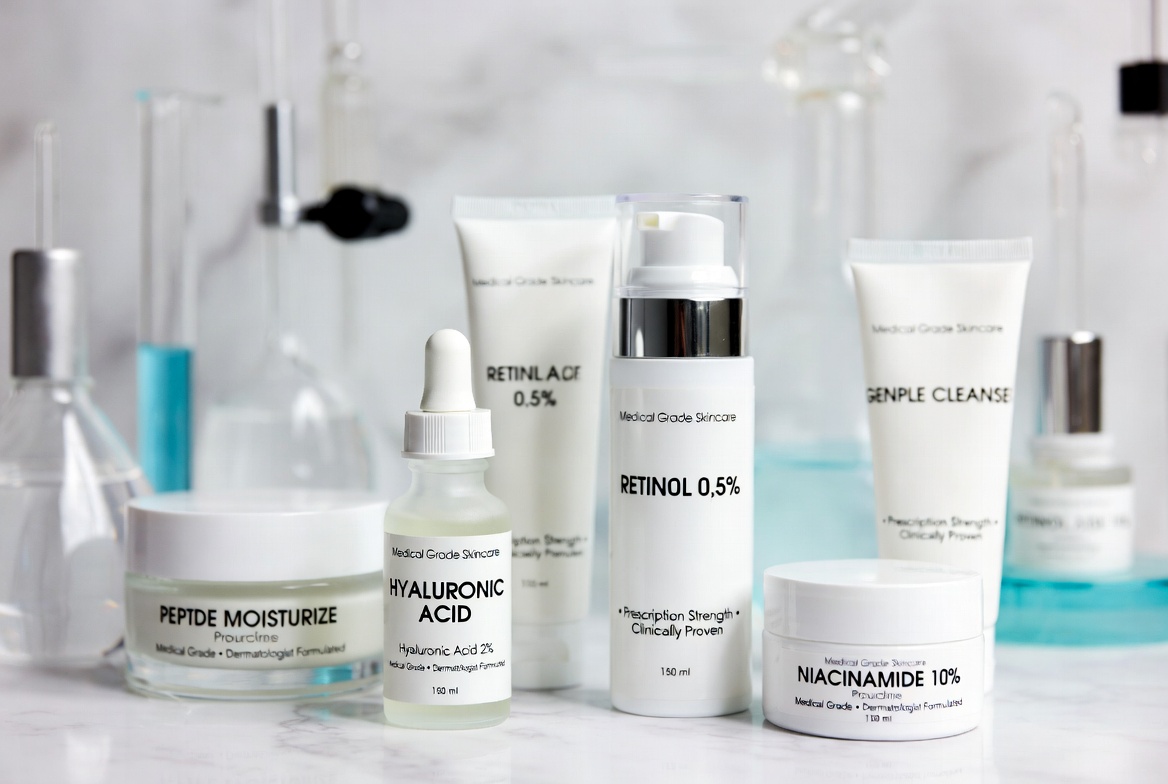
There’s a moment most people hit with skincare where the shelves start to blur together. Everything promises results, everything looks clinical enough, and somehow nothing feels tailored to you. That’s where medical grade skincare product finders have carved out real space. They’re not about guessing, and they’re definitely not about chasing trends. They’re built to narrow things down with intention, using your actual skin profile instead of whatever caught your eye at 2 AM.
The shift toward personalization isn’t just a passing phase. It reflects a growing understanding that skin isn’t one-size-fits-all, and it doesn’t behave predictably based on labels alone. A product finder built around medical grade formulations taps into that idea in a way that feels more grounded and, frankly, more useful.
Why Guessing Falls Short
Walking into skincare without direction usually leads to overbuying and underwhelming results. People mix active ingredients that cancel each other out, overload their skin barrier, or jump between routines before anything has time to work. It’s not a lack of effort, it’s a lack of clarity.
Medical grade skincare sits in a different category because it’s designed with higher concentrations and targeted outcomes. That’s not something you want to experiment with randomly. A product finder takes out that trial-and-error loop and replaces it with a structured approach that actually considers what your skin is doing right now.
It also cuts through marketing language. Instead of relying on vague claims, these tools lean on ingredient logic and skin behavior. You stop buying based on packaging and start choosing based on function.
How The Tools Work
At the center of most of these systems is a diagnostic process that feels more like a consultation than a quiz you’d scroll past. You answer questions about texture, sensitivity, breakouts, pigmentation, lifestyle habits, and even how your skin reacts to certain environments.
Some platforms take it further with image analysis or layered profiling, but even a well-built skincare quiz can pull together a surprisingly accurate snapshot. The key difference is that the results aren’t generic. They’re mapped to formulations that are meant to perform, not just sit nicely on your vanity.
What stands out is how these tools prioritize compatibility. Instead of throwing ten options at you, they narrow the field to a handful that actually work together. That kind of editing is where people start seeing consistency, which is usually what’s been missing.
Smarter Routine Building
Once the guesswork is gone, routines start to make more sense. You’re not stacking products just because they’re popular. You’re building something that has a clear structure, with each step supporting the next.
Medical grade product finders often create routines that are intentionally simple. That might sound counterintuitive when skincare culture leans toward layering everything at once, but restraint tends to win here. Skin responds better when it’s not overwhelmed.
This is where people start noticing changes that feel steady instead of dramatic and short-lived. Texture improves, tone evens out, and irritation becomes less of a constant background issue. It’s not flashy, but it’s reliable.
There’s also a long-term benefit that doesn’t get talked about enough. When your routine is built correctly from the start, you’re less likely to develop new problems from overuse or conflicting ingredients. It saves time, money, and a lot of frustration.
Better Product Matching
The real advantage of these tools is precision. They’re not just matching you to a category, they’re matching you to specific formulations that align with your skin’s current state. That distinction matters.
Medical grade products are designed to do something measurable. Whether it’s improving elasticity, reducing inflammation, or targeting discoloration, they’re built with intention. A finder tool connects that intention to your actual needs.
It also adapts. As your skin changes, whether from seasons, stress, or age, the recommendations can shift with you. That kind of flexibility is what keeps routines relevant instead of stale.
People often underestimate how much the environment plays into skin behavior. A good product finder accounts for that, adjusting recommendations based on climate, exposure, and even daily habits. It’s a level of detail that you don’t get from standing in front of a display and hoping for the best.
Confidence In Your Choices
There’s a subtle shift that happens when you stop second-guessing every product you use. You apply something because it fits your skin, not because you’re testing it out. That confidence changes how consistent you are, and consistency is where results actually come from.
It also quiets the urge to constantly switch things up. When you know your routine has a purpose, you’re less likely to abandon it after a week because something new caught your attention. That steadiness is what allows medical grade skincare to do what it’s designed to do.
This is where practical skincare tips start to matter more. They’re no longer random advice you’re trying to plug into a routine that may or may not work. They become part of a system that already makes sense, which makes them easier to follow and more effective overall.
There’s also something to be said for the mental side of it. Skincare stops feeling like a guessing game and starts feeling like something you understand. That alone changes the experience.
A medical grade skincare product finder doesn’t just recommend products, it changes how you approach your skin altogether. It replaces noise with direction, which is what most routines have been missing all along.