

Table of Contents
The Maruti Suzuki Swift is arguably the most recognisable and successful hatchback in the Indian market. Its popularity ensures that the price of second hand Swift car remains consistently high compared to rivals. For buyers looking for 2nd hand Maruti cars, understanding why the Swift holds its value so well, and how to ensure you are paying a fair price, is essential for a smart investment.
This guide will help you decode the high resale value of the Swift and provide key checks to maximise your purchase.
The Triad of Resale Value: Why the Swift is Expensive
The high residual value of the Swift is driven by three main factors that buyers prioritise in the used car market:
- Unmatched Demand: The Swift has universal appeal across cities and rural areas. This massive, consistent demand ensures high market liquidity, meaning an owner can sell it quickly and at a predictable price.
- Maruti Reliability: As the leader among 2nd hand Maruti cars, the Swift benefits from the brand’s reputation for mechanical durability. Its engines are time-tested, and major breakdowns are rare when maintenance is followed.
- Low Maintenance Cost: Due to the competitive price of second hand Swift car, the sheer volume of Swifts sold ensures that spare parts are cheap and available everywhere. Standardised service costs across the vast Maruti service network keep ownership expenses predictable and low, making buyers willing to pay more upfront.
Decoding the Price by Generation and Fuel Type
The price of second hand Swift car can vary significantly based on the car’s generation and whether it is petrol or diesel. Knowing these differences is key to fair valuation.
| Generation | Key Price Factor | Typical Value Impact |
|---|---|---|
| 1st/2nd Gen (2005–2011) | Age, high mileage, basic features. | Lowest entry price; highly condition-dependent. |
| 3rd Gen (2011–2018) | Introduction of more features (ABS, airbags). | Excellent value proposition; high availability. |
| New Gen (2018 onwards) | Modern engine (K12N), lighter chassis, better safety. | Highest value retention due to current features and age. |
| Diesel vs. Petrol | Diesel (older models) may command a slight premium due to mileage, but face regulatory risk. Petrol holds a steady value. | Petrol is generally a safer long-term investment due to less mechanical complexity. |
Key Inspection Points to Justify the Price
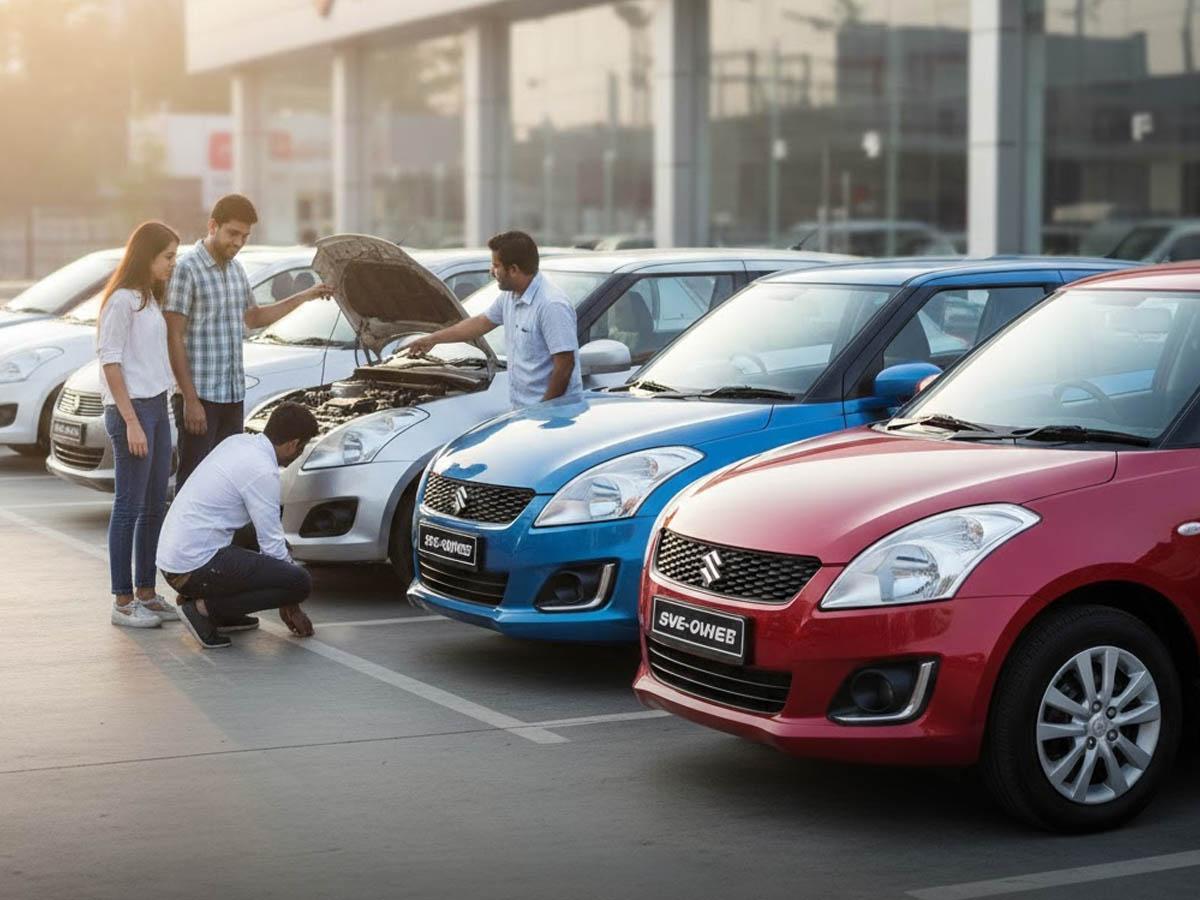
To ensure the high price of second hand Swift car is justified by its condition, focus your inspection on these wear points:
- Engine Bay: Look for any non-standard wiring or signs of modification. The K-series petrol engine is very reliable; check for a smooth, silent idle.
- Suspension: The Swift is often driven hard. Drive over small bumps and listen for rattling or thudding, which indicates worn suspension bushings or link rods.
- Clutch and Gearbox: Test the manual clutch engagement point; it should not be too high. For the AMT automatic (later models), check for a smooth take-off without excessive jerkiness.
- Tyres: Check the tyres for even wear. Uneven wear suggests a neglected alignment or suspension issue, which can be costly to fix.
Swift’s Place Among Other Maruti Used Cars
While other 2nd hand Maruti cars like the Alto offer lower entry prices, the Swift offers a superior long-term ownership experience. The WagonR might offer more space, but the Swift’s driving dynamics and style ensure it retains better appeal, consistently supporting its higher resale price.
By understanding the factors driving the Swift’s market value and performing a detailed inspection based on its generation and fuel type, you ensure that your purchase is not just a popular car, but a smart financial choice backed by the strong market presence and demand.