


Table of Contents
When you search for a business-class ticket, the first number you see often shapes your reaction. A fare may look high, or it may seem reasonable compared to what you expected. That judgment usually happens before you compare it to the economy fare on the same flight, look at how long you will be in the air, or consider whether you are booking during peak season.
The price itself doesn’t tell the full story. If you want to book business-class tickets with confidence, you need to evaluate those variables together rather than react to a single number.
Comparing Business-Class and Economy Prices on the Same Flight
One of the first steps in evaluating the value of a business-class ticket is to compare it with the economy fare on the same flight. Understanding the price difference between these two cabins can give you a clearer sense of whether the business-class price is reasonable for that particular route and time.
If economy tickets cost $1,000 and business costs $2,200, business is about twice the price of economy. On many long-haul routes, this difference falls within a normal range.
If, however, the economy class costs $900 and a business-class ticket on the same flight is $6,000, the situation is different. Business now costs more than six times the economy fare. That wide price difference is telling you that something is affecting the premium cabin prices, which can often be peak-season demand or limited availability on that route. When the spread between the two fares becomes this significant, you might need a clear justification for this additional cost. The wider the price difference, the stronger the reason you might need to pay it.
That relationship between the two cabins tells you whether pricing is typical for that flight or unusually stretched. So before you move on to other considerations, it is best to make sure you understand the actual magnitude of the price difference.
How Flight Duration and Timing Affect Business-Class Value
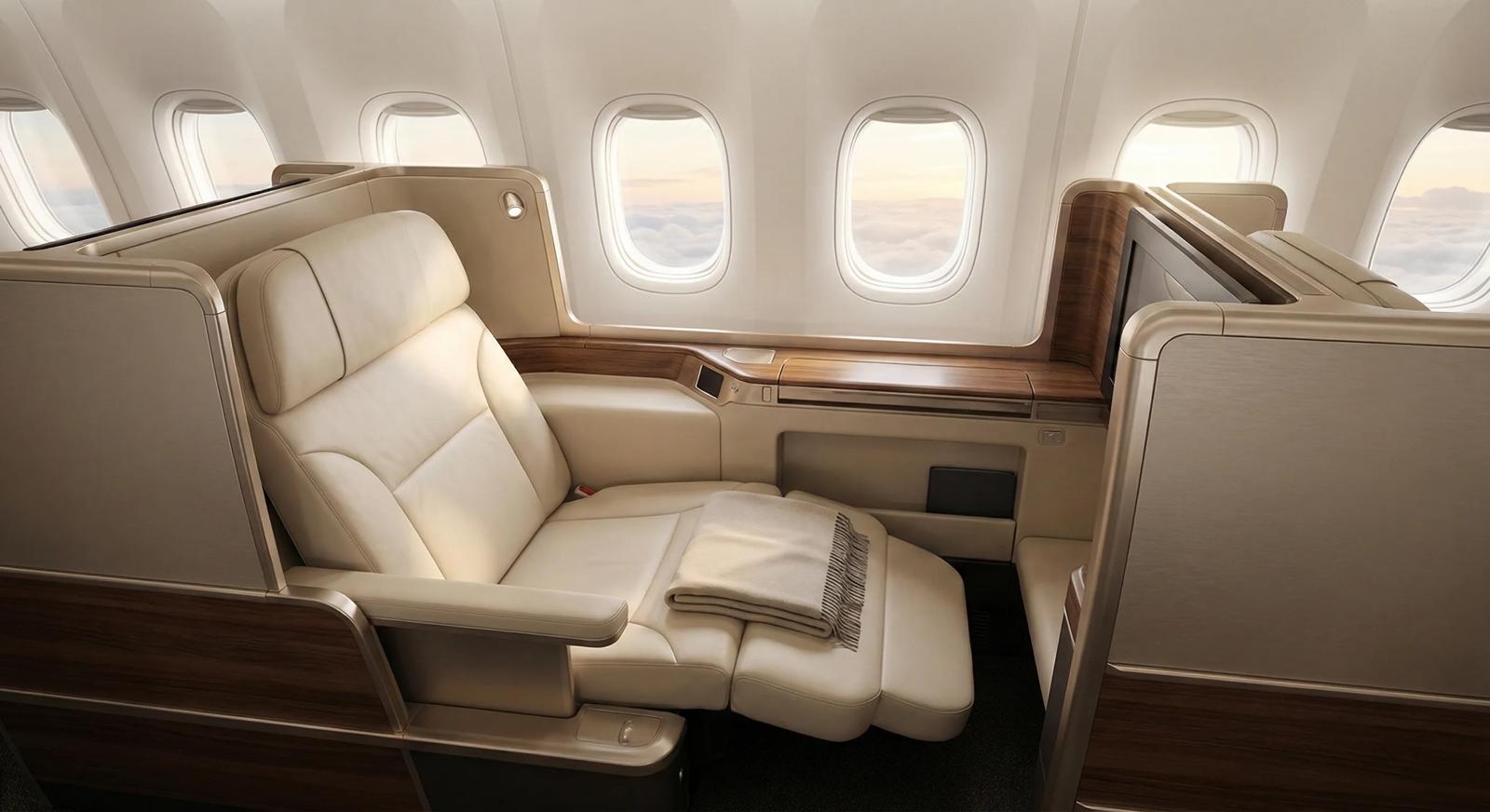
Once you understand the price difference between business and economy, pay special attention to the flight schedule. The same price difference between economy and business may feel proportionate on a 12-hour overnight flight and excessive on a 6-hour daytime route, and here is why:
- On long overnight flights, you are relying on your seat to sleep, and a flat bed can directly influence how you feel the next morning: if you land at 7 am and head straight into meetings, having a good night’s sleep can be crucial. This becomes even more relevant on eastbound overnight flights to Europe. Departure is usually in the evening, meal service takes time, and the total flight time may only allow a few uninterrupted hours of rest. In that setting, the quality of the seat matters even more.
- On shorter daytime flights, particularly westbound routes, the role of business class shifts. You are not trying to sleep through the journey. You remain awake, work, read, or relax, and arrive later the same day. Business class still provides more space, privacy, and exceptional service, but you may not need the most advanced lie-flat suite product, such as United Airlines Polaris or Qatar Airways Qsuite, for that schedule.
In such situations, you need to compare not only business versus economy, but also one business-class product against another. A simpler reclining seat at a lower price may meet your needs just as effectively on a daytime flight. When evaluating a fare, consider how the seat will function for you on that specific flight, and with guidance from platforms like BusinessClass.com, you can determine if the extra cost is truly worth the upgrade.
How Seasonal Demand Affects Business-Class Pricing
After you consider how the seat will function on your specific flight, take one step back and look at the broader market. The time of year might be significantly affecting the fare you are seeing.
From June through August, travel from the United States to Europe increases sharply. On routes such as New York–Rome or Chicago–Paris, business-class fares often rise 30–50% compared to shoulder-season months. For example, a non-stop flight from John F. Kennedy International Airport (JFK) in New York to Leonardo da Vinci-Fiumicino Airport (FCO) in Rome costs roughly $2800 in March, but the price for the same flight in June increases to $4850. Economy fares rise as well, but business cabins frequently sell out faster, which pushes the remaining seats into higher pricing tiers.
Asia-bound routes show similar patterns. The cherry blossom season increases demand for travel to Japan in the early spring. Lunar New Year affects pricing across multiple Asian markets in late winter. During these periods, lower business-class fares can disappear quickly, leaving only higher fares available. For instance, a nonstop flight from Los Angeles International Airport (LAX) to Tokyo’s Haneda Airport (HND) during the cherry blossom season in late March will cost about $16,500, while the same flight in early July, which is off-season in Japan, will cost roughly $3,500.
Understanding seasonality helps you interpret the fare in front of you. If you are booking during a peak travel window, a wider price difference between economy and business may reflect temporary demand rather than a lasting shift in value. That perspective allows you to decide whether to adjust travel dates, review alternative routes, or accept the higher fare with full awareness.
How to Apply Business-Class Fare Comparison to Your Trip

Once you’ve reviewed the business and economy fares, take a step back and look at your itinerary as a whole. Consider these key factors to evaluate if the business-class fare aligns with your needs:
Checklist for Evaluating Business-Class Value:
- Flight Duration: Consider how long you’ll be in your seat and whether the flight duration justifies the cost of business class for comfort and rest.
- Overnight Flights: If you’re flying overnight, think about how important it is to arrive rested and ready for your schedule.
- Recovery Time: Assess whether your schedule allows time to recover between flights and whether business class will facilitate that recovery.
- Typical Price Difference: Determine if the price difference between business and economy is typical for the route or unusually high.
- Peak Travel Periods: Consider whether you are booking during a peak travel season when fares are typically higher due to increased demand.
If most of your answers suggest that comfort will directly affect how you arrive or perform, and the price difference is in line with normal pricing for that route, booking business class is a rational choice.
If the flight is short, daytime, or priced unusually high due to seasonal demand, the decision becomes more personal. In that case, you are deciding how much you value the added comfort relative to the extra amount you would pay over the economy fare.
This approach does not limit premium travel. It ensures that when you choose business class, the extra amount you pay over the economy fare matches the practical benefit you expect to receive on that specific flight.
Making an Informed Business-Class Decision
When it comes to booking business class, it’s important to view the fare in the context of your specific trip. Rather than focusing solely on the price, consider how the flight fits your needs, whether it’s the flight duration, timing, or the added comfort of business class that will directly impact your experience.
By evaluating the fare through the lens of practicality and understanding the factors at play, you can make a decision that goes beyond the price tag, and you avoid the mistake many travelers make when they see the price for the first time. Whether you prioritize rest on a long-haul flight or space and privacy on a short daytime journey, the key is to choose the option that best supports your goals for the trip. This approach leads to more thoughtful, value-driven choices that align with your travel needs.