


Table of Contents
Free websites are reshaping how people use the internet in 2026 by cutting steps out of everyday tasks and making useful tools feel instant. When people can learn, schedule, read, and track info without paying or logging in, their habits shift toward faster, simpler workflows that work anywhere.
Free Websites That Changed How We Use the Internet for 2026 are not flashy. They are practical sites people open without thinking because they solve a problem in seconds.
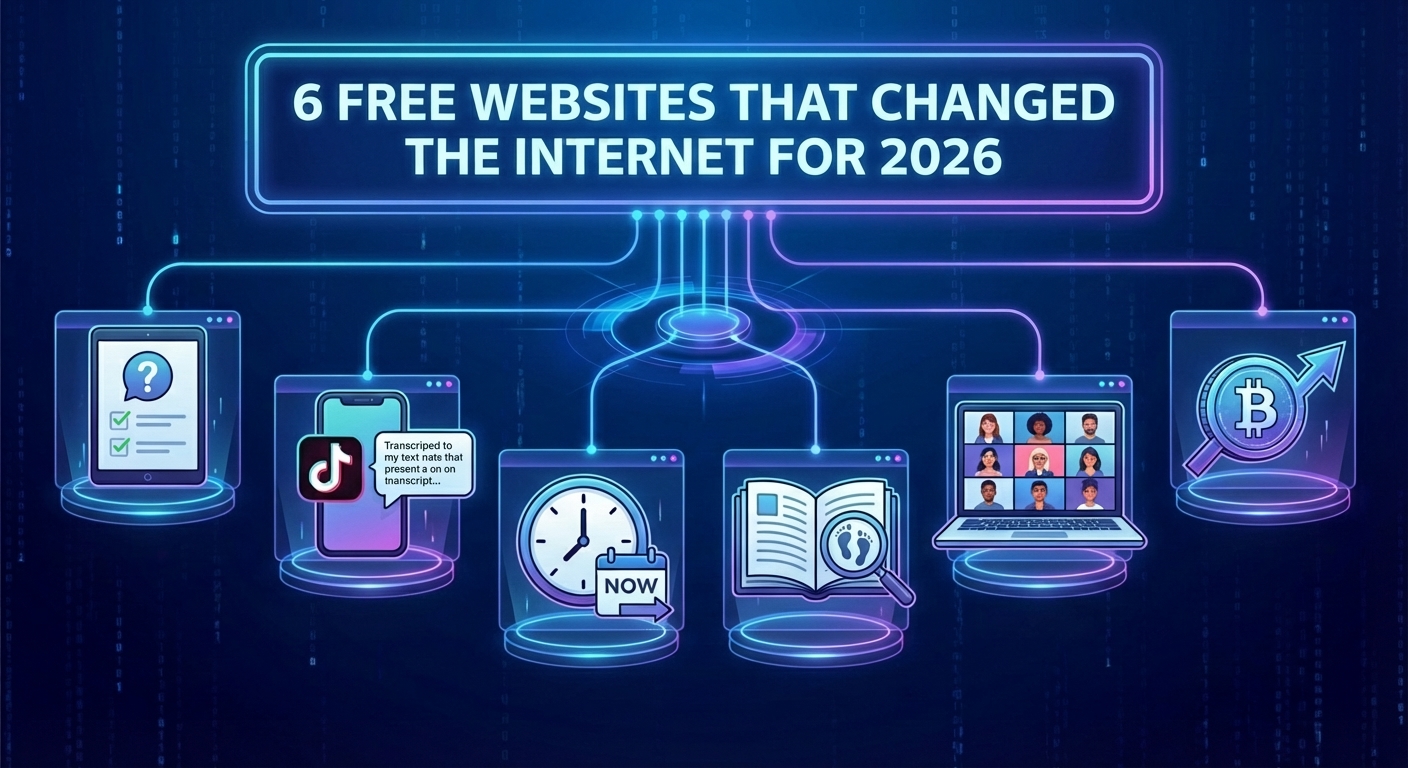
Many users start with an online quiz platform when they want a quick knowledge check without committing to a full course.
A TikTok transcript tool helps people scan video content in silence when they are on the move or working nearby others.
For anyone coordinating across time zones, the first tab open is often a site showing time right now.
Why are free platforms dominating digital habits in 2026?
Free platforms dominate because they respect attention. People want tools that load fast, explain themselves clearly, and deliver a result with minimal input.
This also matches the web’s push toward more inclusive design, especially when developers follow guidance like the Web Accessibility Initiative (WAI) guidelines from W3C.
The new baseline: instant value
A free site earns repeat visits when the first interaction feels complete. If a user can finish a task in under a minute, they are likely to return.
Speed matters, but so does certainty. People stay when the outcome is predictable and the next step is obvious.
Free does not mean low quality
In 2026, “free” can signal focus. Many of the best tools are narrow by design, doing one thing well instead of offering endless settings.
Users are also more selective. A tool that wastes time gets closed quickly, even if it costs nothing.
What makes a website truly useful today?
A useful website feels like a shortcut. It removes decision fatigue, reduces tabs, and helps people move on with their day.
Clarity is the real feature. The best sites make their purpose obvious within seconds.
Utility beats novelty
Many websites compete for attention, but free tools win by reducing effort. Users do not want another platform to manage. They want a quick result.
That is why single-purpose sites keep growing, even when they look simple.
Trust is built through restraint
Modern users are cautious about popups, forced signups, and unclear privacy choices. A clean interface signals respect.
When a tool avoids pressure tactics, it feels safer to use and easier to recommend.
1. Quick learning that fits into real life
Micro-learning is now part of everyday browsing. People test themselves during short breaks, on commutes, or while waiting in line.
Many return to an online quiz platform because it turns learning into something light and repeatable.
These tools work well for both solo practice and group review. They also make it easier to share progress without making it feel like homework.
2. Video you can search and skim
Short-form video is everywhere, but users increasingly want control over how they consume it. Text makes content easier to scan, save, and revisit.
A TikTok transcript tool turns a fast video into something you can read like notes.
That change matters for accessibility, but it also matters for speed. People can jump straight to the part they care about without replaying the whole clip.
3. A simpler way to live across time zones
Global schedules are no longer a special case. Friends, teams, and communities are spread out, and time confusion causes real friction.
A world clock site reduces mistakes by showing the same moment in different places at a glance.
The best time tools feel calm. They do not distract. They just answer the question.
4. Niche discovery that feels organized
The internet has always supported niche interests, but organization has changed what feels “normal” to browse. When information is structured, it becomes easy to explore.
People use celebrity feet for a very specific kind of cataloged curiosity.
Whether or not everyone shares the interest is not the point. The point is that free websites can make even narrow topics feel searchable and orderly.
5. Scheduling that replaces the back-and-forth
Email chains still exist, but fewer people want to negotiate times manually. Scheduling is now expected to be self-serve.
A meeting scheduler helps people pick a time without endless messages and follow-ups.
This small change improves collaboration because it protects focus. It also removes the awkwardness of saying “no” to a suggested time.
6. Real-time finance without the heavy interface
Many people do not trade actively, but they still want awareness. A quick price check is enough for casual curiosity or daily context.
Some users simply check Bitcoin price to stay oriented without opening a full finance dashboard.
That behavior shows how finance has blended into everyday browsing. It is not always deep research. Sometimes it is just a quick glance.
How these sites changed everyday behavior
These sites did not just add features. They changed expectations about what the web should do, and how quickly it should do it.
People now assume a helpful site will be fast, focused, and easy to leave when the task is done.
Here are three expectations that show up again and again:
- Tools should work instantly without setup.
- Value should be obvious before any commitment.
- Simplicity should beat endless customization.
A snapshot of modern free tools
| Use Case | What Users Expect | Why It Matters |
| Learning | Quick feedback | Builds repeat habits |
| Video | Readable content | Supports silent browsing |
| Time | Instant clarity | Prevents scheduling errors |
| Scheduling | Fewer messages | Protects focus |
| Finance | Fast context | Keeps awareness light |
Why Free Websites That Changed How We Use the Internet for 2026 still matters
Free Websites That Changed How We Use the Internet for 2026 matters because it captures a shift in power. Users now choose tools that reduce friction, not tools that demand attention.
The web is moving toward smaller, sharper utilities. When a site does one job well and stays out of the way, people adopt it naturally.