


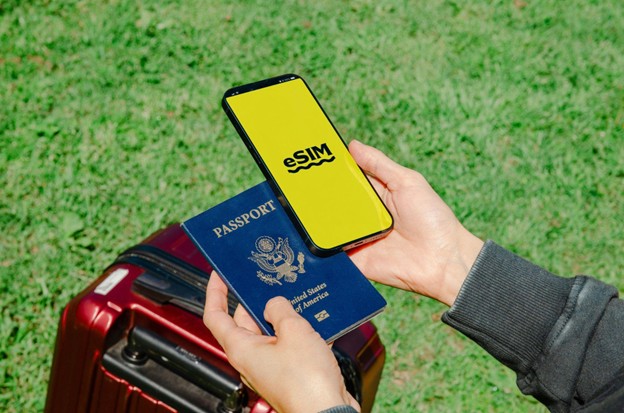
2023 marked a major turning point for eSIM adoption. The United States continues to lead the global shift toward eSIM technology, supported by a large base of connected devices, according to Statista. eSIMs power a wide range of connected devices, including smartphones, smartwatches, and various IoT technologies.
In programs like the U.S. government’s Lifeline initiative, carriers support eligible customers by providing affordable communication means through free eSIMs and more.
eSIM Technology Simplifies Connectivity for Modern Devices
An eSIM is essentially a rewritable digital SIM chip that’s permanently soldered onto a device’s motherboard at the factory. Unlike a standard SIM card, an eSIM can be digitally programmed with your carrier information.
eSIM is transforming how cellular plans are activated and managed. Users can activate mobile service or switch carriers by simply scanning a QR code or entering carrier details – no waiting for a physical SIM to arrive.
Devices can store multiple carrier profiles, which is especially helpful for travelers who need local or temporary plans.
Since eSIMs are embedded and not removable, they make it harder for someone to steal or tamper with your mobile identity if the device is lost.
eSIM support is growing rapidly across a wide range of devices, extending far beyond premium smartphones.
Many flagship models, including iPhones, Google Pixel phones, and Samsung Galaxy devices, now feature eSIM technology, with some markets even shifting to eSIM-only designs. Tablets also benefit from eSIM by offering mobile connectivity without the need for bulky SIM trays.
In the wearable space, smartwatches such as the Apple Watch Cellular and Samsung Galaxy Watch use eSIM to operate independently from a paired phone.
Free eSIMs Help Low-Income Consumers Gain Digital Access
Lifeline is a U.S. government initiative that helps low-income households stay connected.
The program aims to reduce the digital divide by offering discounted or free communication services. Eligible consumers typically receive a monthly discount of $9.25 on phone or internet services, and in tribal lands, this discount is higher.
Through programs like Lifeline, more individuals and households are gaining reliable access to essential communication services that are critical for daily life.
Participating in Lifeline, eligible users receive:
- Free monthly phone or internet service, including data, calls, and text, all available in a free SIM card or eSIM free.
- Free or heavily discounted smartphones or tablets from participating providers, including AirTalk Wireless.
Lifeline is enabling more Americans to stay connected for essential services like work, education, healthcare, and emergency communication. Therefore, digital access is more equitable and widely available.
Applicants must meet Lifeline program requirements, which are based on household income or participation in government assistance programs such as SNAP, Medicaid, SSI, and others.
Users can apply online directly via the AirTalk Wireless website.
- During registration, they can either select eSIM activation if they already own an eSIM-compatible device or choose to receive a free device that supports eSIM.
- To activate eSIM, you simply open the mobile network settings on your phone, scan the QR code, and the carrier profile is downloaded to the embedded eSIM chip. Activation finishes within minutes.
Because everything is digital, there is no physical SIM card. With eSIM, you can buy, activate, and manage your mobile plan digitally without visiting a store or waiting for a physical SIM to arrive. It also provides enhanced security.
Additionally, they offer global flexibility. With AirTalk Wireless, users will benefit from international calling to over 200 countries and territories.
The Future of eSIMs in Consumer and Industrial Devices
The future of eSIM technology is far bigger than simply replacing traditional physical SIM cards. It is becoming the foundation of a fully integrated, always-connected ecosystem across both consumer and industrial sectors.
In consumer electronics, eSIM is rapidly moving toward an eSIM-only future, powering slimmer, more durable smartphones, tablets, laptops, and wearables while giving users effortless international connectivity without physical SIM swapping.
Beyond current applications, eSIM paves the way for unified digital identities and centralized service management across all personal and industrial devices.
For programs like Lifeline, which provides vital communication services to low-income households, eSIM technology represents a powerful tool for expanding access.
Free eSIM offerings can eliminate traditional barriers like physical SIM distribution, activation delays, and device compatibility issues.
As eSIM adoption grows, we’re moving toward a future where staying connected is universal.
Whether you’re a traveler switching networks across borders, a student accessing educational resources, or someone relying on Lifeline support to stay in touch with family and opportunity, eSIM technology is breaking down walls and building bridges to a more inclusive digital world.