

Table of Contents
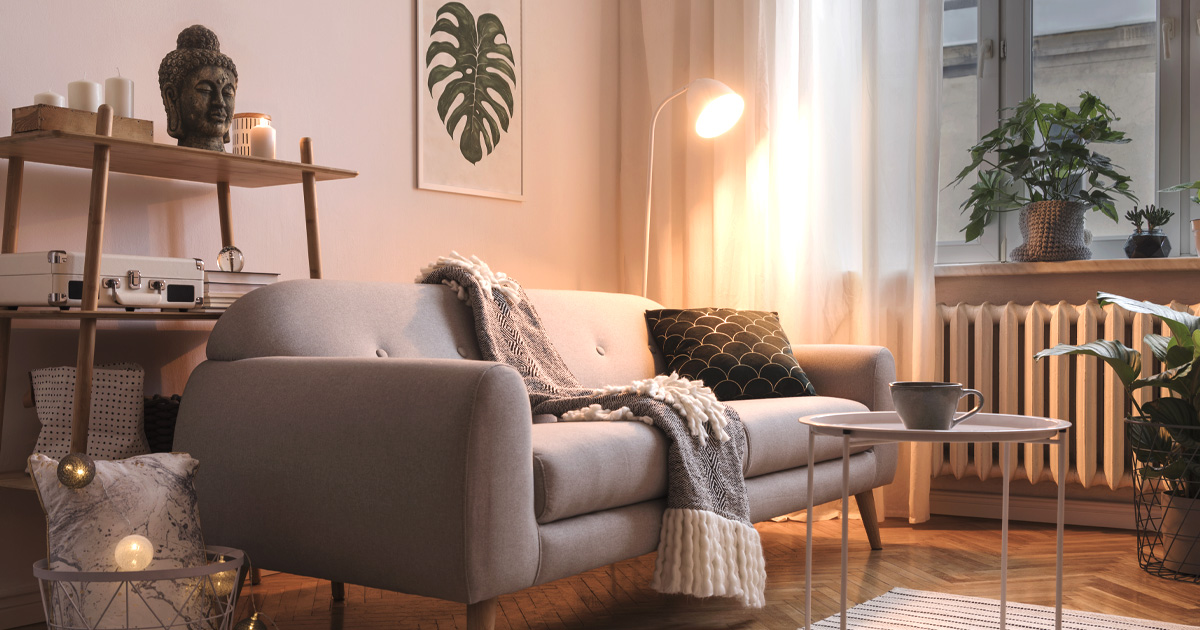
Lighting fundamentally changes how a room feels. Done well, your living room becomes a space you actually want to spend time in. Done poorly, you’ll find excuses to be anywhere else. The difference? You don’t need a contractor, new fixtures, or a renovation budget.
What matters is understanding how light moves through your space and what your room needs at different times of day.
How Living Room Lighting Strategy Actually Works
Five years ago, most living rooms relied on a single ceiling fixture that cast flat, uninspired light everywhere. That approach is disappearing because it doesn’t work. Today’s smarter approach uses layering, combining different light sources at varying heights and intensities.
Homeowners have noticed this shift. Smart home adoption jumped from 49% in 2024 to 59% in 2025, with smart lighting accounting for 31% of those installations. Whether you choose smart technology or statement pieces like custom neon signs, the core idea is the same: lighting matters when it’s thoughtfully designed.
People invest in systems that let them adjust, dim, and change their lighting throughout the day. You don’t need advanced technology to benefit from these ideas; the principles work for anyone.
The data shows what people actually want: flexibility. They want to adjust the lighting for different activities throughout the day. They want warmth without complexity. And they want solutions that work in rentals, small apartments, and large family rooms alike.
1. Master the Three Layers of Light
This is where most living rooms fail. Layered lighting has three components: ambient (your overall light), task (focused light for what you’re doing), and accent (light that highlights what you want to see).
Ambient lighting is your foundation. It should never feel harsh or clinical. A ceiling fixture alone doesn’t cut it. Instead, consider recessed lights paired with other sources, or skip overhead entirely and use indirect lighting. LED strips hidden above crown molding bounce light off the ceiling and spread it evenly, no shadows, no hot spots.
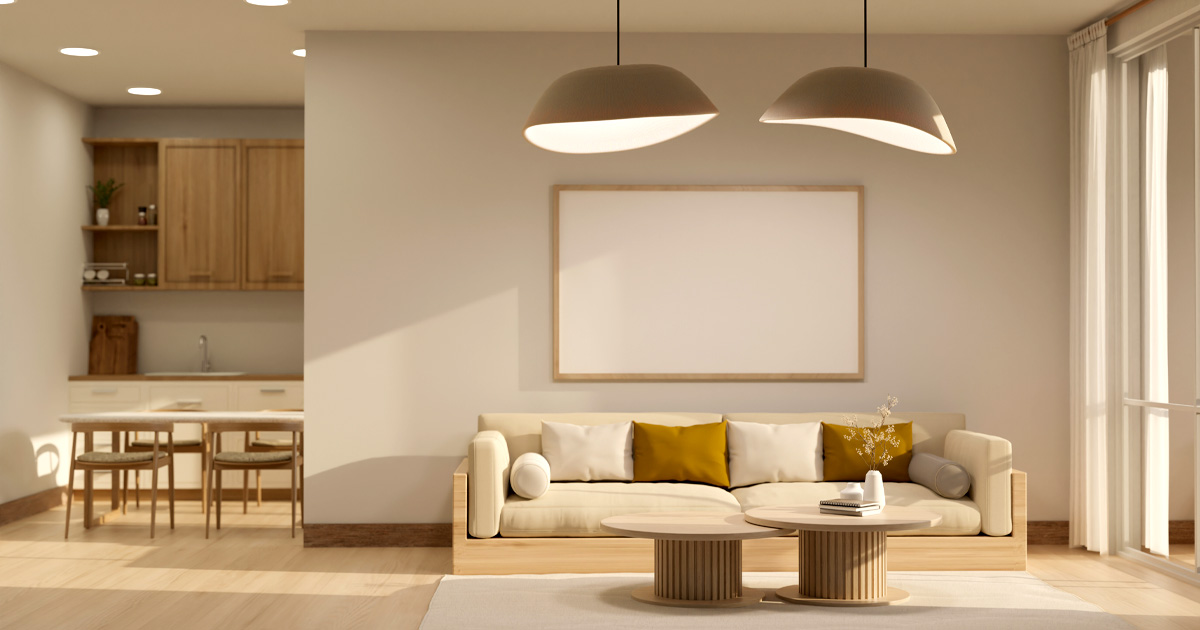
Task lighting handles Functionality. A table lamp beside your couch for reading. Wall sconces next to where you work. Track lighting aimed at a console table. These lights should sit at eye level when you’re seated, so light reaches where you need it without causing strain or glare.
Accent lighting is visual. It draws attention to what matters: artwork, a fireplace, exposed beams, or interesting objects you want to showcase. Small focused lights over a gallery wall or strip lighting under floating shelves create depth. The room feels intentional, not randomly lit.
The real advantage appears when you can control each layer separately. A dimmer on your ambient and accent lighting lets you shift from bright and functional (afternoon work) to soft and intimate (evening entertaining) without touching anything else.
2. Add Statement Sconces (Without Ceiling Work)
Wall sconces have made a genuine comeback. They do something ceiling fixtures can’t: they add warmth, direction, and personality in a way that feels intentional.
Mount sconces on either side of your sofa, fireplace, or console table. A pair creates balance. A single sconce beside a reading chair provides focused light for books without overhead brightness. Modern options come in finishes that work with almost any aesthetic: brushed brass, matte black, vintage Edison bulbs, or sculptural designs that function as art.
Look for fixtures with adjustable arms or heads. This lets you angle the light exactly where needed. Pair them with warm 2700K bulbs for that relaxed, comfortable feeling. If you want flexibility throughout the year, tunable white bulbs shift from bright daylight to warm candlelight and work with standard dimmers. They’ve become affordable enough that most people don’t notice the cost difference.
One practical detail: check electrical outlets before you commit. If you rent or are worried about wall anchors, test with temporary LED strips on the same wall first to see if the lighting angles actually work for your space.
3. Layer in Floor and Table Lamps for Vertical Dimension
Overhead lights alone flatten a room. Lamps at different heights create depth and make spaces feel more designed. This matters especially in living rooms where people actually gather.
An arc floor lamp that sweeps over your sofa adds ambient light while becoming a sculptural element. Table lamps on end tables or consoles provide functional light and visual weight to break up empty surfaces. Combining these heights, floor, table, and wall creates an arrangement that feels naturally layered.
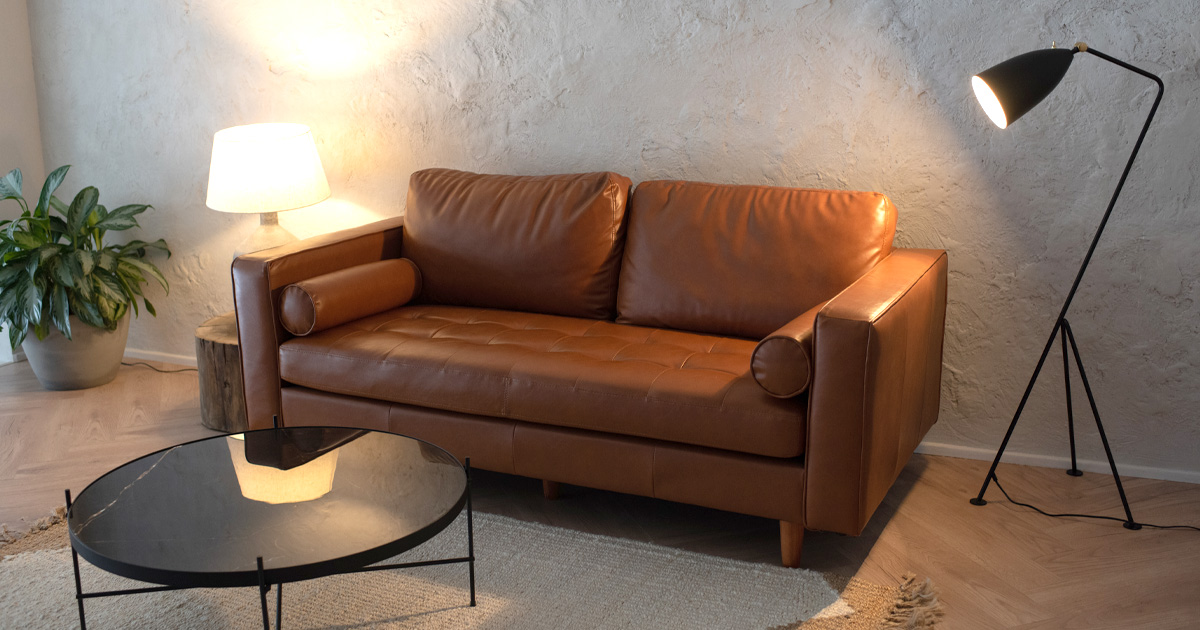
Small spaces need multi-functional fixtures. An adjustable floor lamp can switch between task and ambient modes. Use neutral or patterned shades to soften light and prevent glare.
Cord management matters more than people realize. Multiple cords create visual clutter and hazards. Run them along baseboards or use cord covers, especially when layering several floor lamps.
4. Choose the Right Color Temperature (It Actually Shapes Your Mood)
Color temperature, measured in Kelvin, controls how a room feels. For living rooms, aim for 2700K to 3000K. This warm, yellowish light creates a sense of calm and comfort.
Your brain responds to warm light. Colors look richer. Spaces feel cozier. You naturally want to sit there longer. Cool light (above 4000K) energizes and promotes focus, making it suitable for offices but not for spaces where you want to relax.
Here’s the common mistake: mixing color temperatures. A ceiling fixture at 5000K clashing with table lamps at 2700K creates an uncomfortable, discordant feeling. Consistency wins. Choose warm 2700K to 3000K as your baseline and match all fixtures.
If you want flexibility between daytime work and evening relaxation, use tunable bulbs on key fixtures rather than mixing different types. They’re more affordable now than they were three years ago.
5. Use Statement Neon for Artistic Focal Points
Modern neon signs for home decor have transformed how people approach lighting in the living room. Custom LED neon delivers the soft, continuous glow of traditional neon with better durability, flexibility, and lower energy consumption. It’s not the harsh, flickering neon of decades past.
What makes neon work in a living room? The light is diffused and forgiving. It doesn’t cast harsh shadows as spotlights do. The gentle glow softens edges and creates a subtle halo around surrounding elements. A neon sign serves both as illumination and wall art.
The possibilities are genuine. A subtle geometric design fits minimalist spaces. An abstract curve works in personality-driven rooms. Colors range far beyond hot pink: soft pastels, muted tones, and gradients that match your existing decor or establish an entirely new focal point.
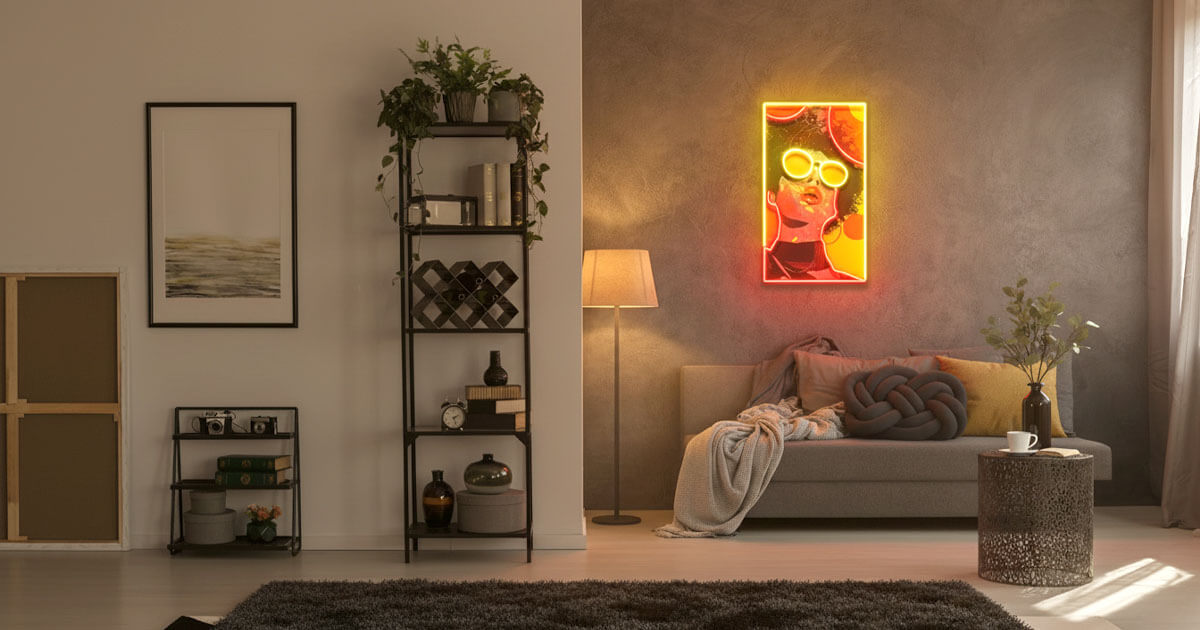
Practically: modern LED neon uses minimal power and produces virtually no heat. It’s safe for all-day use without running up your electric bill. Installation is straightforward: mount with brackets and plug into a standard outlet.
6. Install Dimmer Switches (The Most Underrated Upgrade)
A dimmer on your ambient and accent lighting is one of the smartest investments you can make. Beyond mood, dimming actually cuts energy use and extends bulb life.
Modern dimmers work with LEDs, letting you adjust from full brightness during the day down to 10-15% for the evening. The effect is real: dimmed light changes how your nervous system responds to the space. People feel calmer. They relax more easily.
Install dimmers on your primary ceiling fixture, wall sconces, and track lighting. Keep task lighting at full brightness. People need intensity for focused work.
Important note: not all bulbs dim smoothly. Buy “dimmable” LEDs specifically. Check compatibility before purchasing to avoid flickering.
7. Create Drama with Uplighting
Uplighting bounces light toward the ceiling, creating architectural interest. It makes spaces feel larger and is useful in small to medium living rooms.
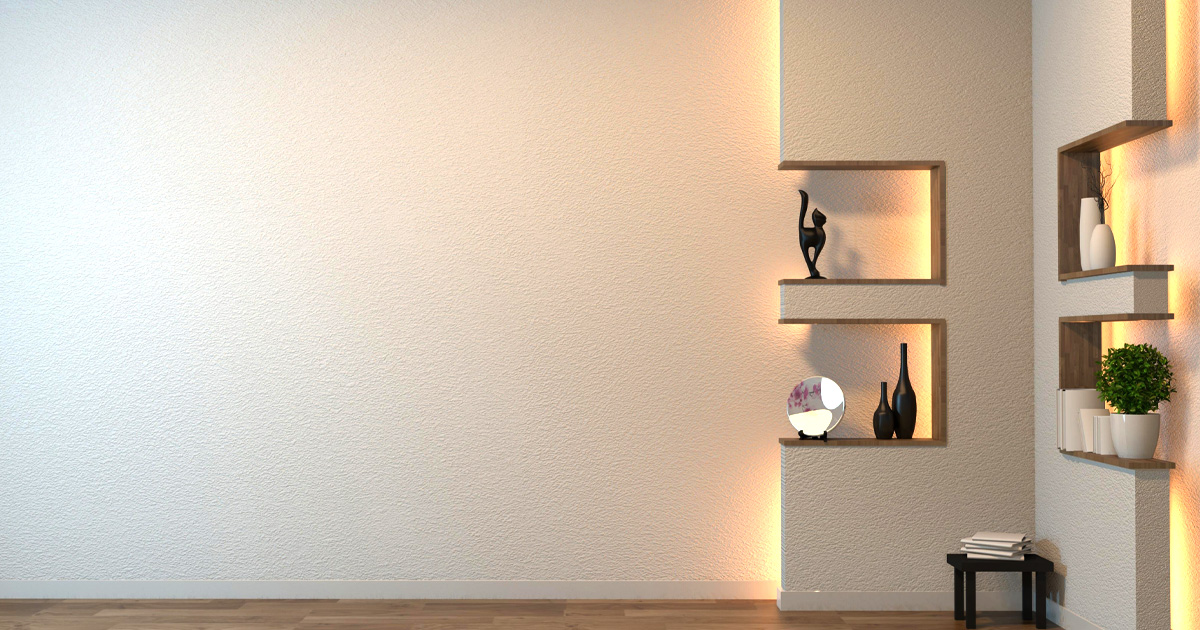
Target a textured wall, architectural feature, or shelving with an uplight fixture. These small, discrete fixtures sit low and cast light upward, highlighting texture and depth without drawing attention to the fixture itself. Your eye follows the light upward, which subconsciously makes the room feel taller.
Glow lines take this further. These discrete linear lights sit in trim, baseboards, or shelving and create a quiet, luxurious effect while lighting your path at night. They’re no longer exclusive to high-end homes; they’re now available at reasonable prices.
8. Balance Natural Light with Artificial Sources
Your living room probably gets natural light at certain times. The key is layering artificial light to complement these patterns, not fight them.
In rooms with east or west windows, the morning and evening sun is strong.
Your artificial lighting should adapt. During peak daylight, use mainly task and accent lighting, dimming ambient sources. As evening comes, turn up ambient and accent layers to smooth the transition as natural light fades.
North-facing rooms get consistent, indirect light all day. Add warm artificial light to prevent the space from feeling cool or cave-like. Sheer curtains moderate harsh direct sun while keeping natural light benefits. This lets your light layers work well throughout the day.
Note: certain color temperatures pair better with natural light. Warm 2700K bulbs complement the afternoon sun beautifully. Tunable options let you shift as light changes.
9. Highlight Architectural Details Worth Emphasizing
Every living room has features worth emphasizing: crown molding, a fireplace, exposed beams, and ceiling details. Accent lighting brings these forward.
Picture lights mount above artwork or architectural elements for subtle emphasis. Shelf lights under floating shelves draw attention to displayed items. Cove lighting hidden along crown molding casts soft light that defines the room’s perimeter and adds perceived height.
The strategy is intentional. Don’t light everything equally. Instead, guide attention toward your room’s best features. This makes the space feel designed and purposeful.
10. Mix Vintage and Modern Fixture Styles
There’s a documented trend toward vintage and vintage-inspired lighting. Antique sconces, mid-century floor lamps, and Edison-style bulbs bring warmth and authenticity that mass-produced fixtures often miss.
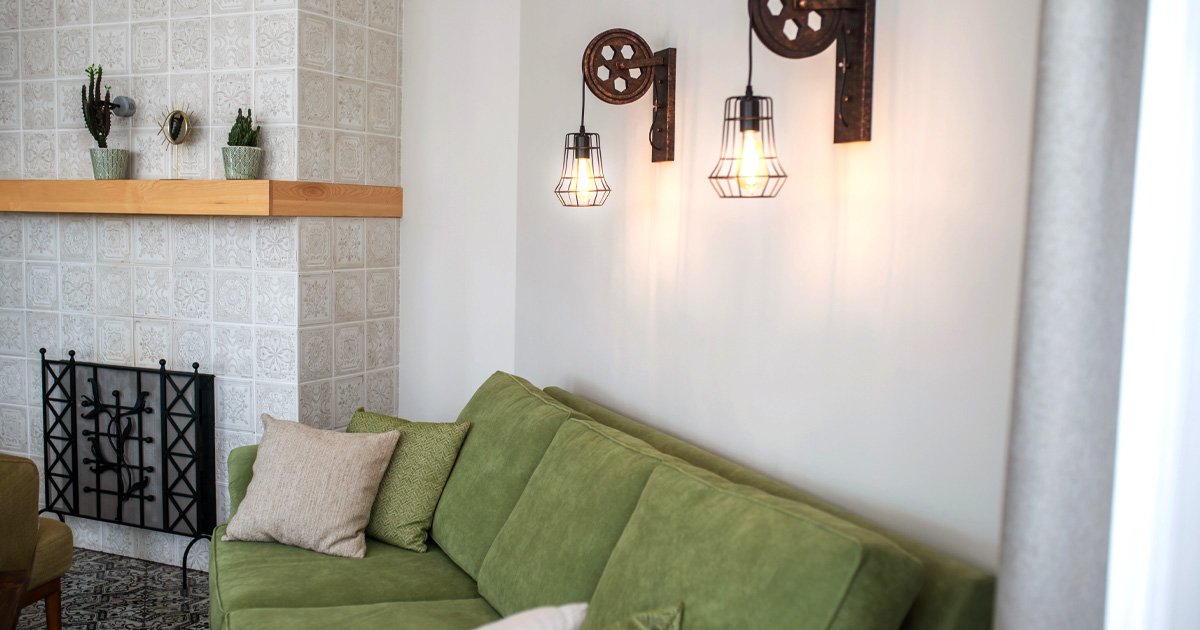
The modern approach mixes era-specific pieces with current design. A brass 1970s pendant works beautifully with minimalist furniture. Vintage glass sconces with updated finishes fit eclectic, layered schemes. Old and new together create visual interest and signal that choices were intentional.
Thrift stores, vintage markets, and online platforms make finding these pieces straightforward. One important caution: confirm that older fixtures meet current electrical safety standards before installing. Rewiring vintage pieces with modern certified components usually justifies the cost.
11. Use Curved, Organic Fixture Shapes
Geometric and angular furnishings dominate modern living rooms. Curved and organic lighting shapes balance this, softening hard edges and adding movement. Think flowing pendants, asymmetrical arm lamps, or delicate sculptural fixtures inspired by nature.
This reflects a broader design shift toward biophilic elements, bringing natural, organic forms indoors to reduce stress and support wellbeing. A gently curving arc lamp, a fixture with flowing lines, and a soft, rounded pendant create visual interest while maintaining harmony.
Curved lines are calm and comfortable. Angular lines energize. In a room meant for relaxation, curved lighting supports an environment that feels more soothing.
12. Consider Smart Lighting for Long-term Flexibility
The smart lighting market is projected to grow from $18 billion in 2025 to $41.8 billion by 2030. That growth reflects genuine consumer interest, though cost remains the leading barrier, 46% of consumers cite expense as the main reason they haven’t adopted.
Entry-level smart bulbs and controllers have become affordable. Smart bulbs let you adjust brightness and color temperature through an app or voice command, set schedules that match your natural rhythm, and create preset scenes for different situations (movie night, dinner party, morning work).
The practical benefit is simple: program your lighting once, then stop thinking about it. Lights brighten in the morning and dim in the evening. Control multiple fixtures from your phone. Guests notice the room is well-lit because it actually adapts to the time and activity.
If the budget is tight, start with one or two key fixtures converted to smart bulbs rather than rewiring everything. A smart bulb in your primary ambient fixture and one in task lighting gives most of the benefit for much less cost. Expand as your comfort level and budget grow.
What Homeowners Actually Prioritize in Living Room Lighting
Research consistently shows what buyers actually care about. Energy efficiency ranks high. LEDs now dominate, using up to 80% less power than incandescent bulbs. Beyond that, people want flexibility. They want lighting that changes throughout the day, supports different activities, and doesn’t require technical skill to adjust.
Color temperature control matters more than many realize. When given the choice, homeowners prefer lighting that matches natural daylight over static warm or cool sources. This drives adoption of tunable systems, though standard warm 2700K remains the baseline for living rooms because it’s relaxing and forgiving.
Interestingly, smart lighting adoption is rising, but cost and installation complexity hold people back. This suggests that straightforward solutions, proper layering, statement fixtures, and dimmers deliver most of the value for typical homeowners without technical investment.
The Real Shift: Intention Over Investment
Transforming your living room’s lighting doesn’t require renovation, contractor calls, or major spending. It requires understanding how light moves through space and what your room actually needs at different times of day.
Start with layering: ambient, task, and accent sources at different heights. Add dimmers for flexibility. Then choose statement pieces: sculptural floor lamps, wall sconces, or a custom neon sign that reflects who you are.
Use warm color temperatures. Emphasize your room’s best architectural features. Don’t underestimate how much a single strategic fixture can change the entire feel.
Living rooms that people actually want to sit in share one trait: intentional lighting design. Not an expensive or complicated design, but thoughtful layering that recognizes how light shapes mood, function, and our experience of space.
Start with one or two changes this week. Watch what happens. You’ll be surprised at how much difference careful light adjustments can make.